
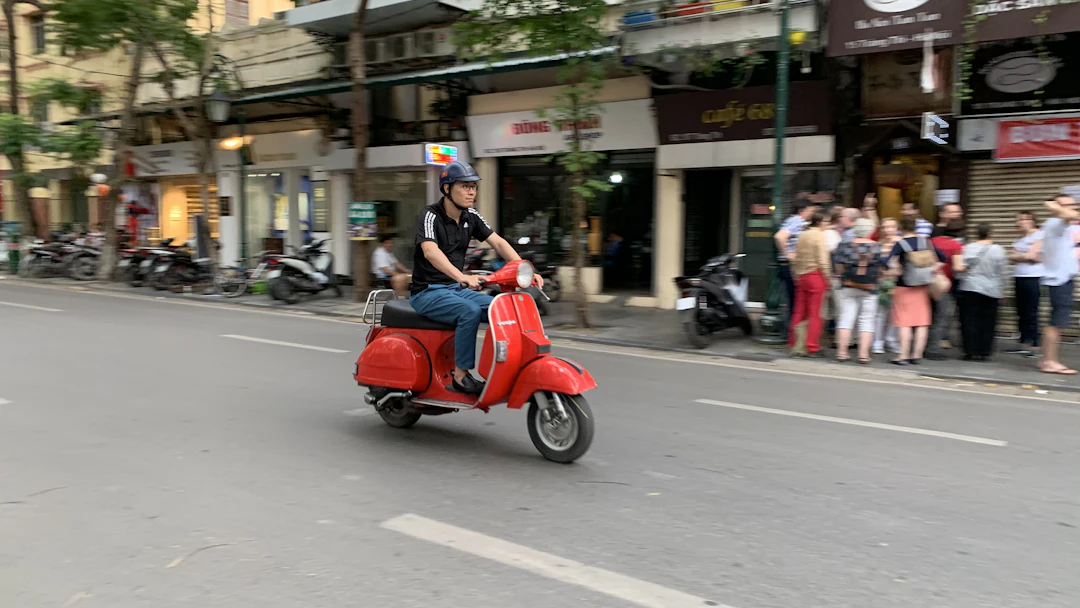
Visitors considering a motorbike rental in Hanoi should look beyond the amount advertised for a single day. The money required to collect and use a bike may include a hire charge, a refundable security deposit, fuel or charging, parking and any agreed handover or late-return fees.
This guide explains how to request and compare quotes for a one-day visit, a longer holiday or an extended stay. It also highlights licensing, insurance and safety questions that are especially important for international travellers. It is not a confirmed Mr Tú price list: the actual vehicle, terms, pickup point and total must be agreed with the operator.
Why a low daily rental headline can be misleading
Table of contents22
Two listings with similar daily rates may differ in their return deadlines, deposits, accessories, geographical restrictions and handover fees. One provider could define a rental day differently from another. Visitors should therefore compare offers using the exact same vehicle category, start time, end time and intended route. Ask for a written breakdown rather than relying on a screenshot or old social-media promotion. Do not treat an example from another rental company as a price commitment by Mr Tú. A clear and realistic quotation is worth more than an appealing amount without conditions.
Does one rental day mean 24 hours?
Never assume the answer is yes. Some rental arrangements use a 24-hour period beginning at handover, whereas others refer to a specified collection and return window. A tourist collecting a bike in the afternoon may be surprised by a next-morning return deadline unless the rule was explained. Ask exactly when the clock starts, whether a small delay is charged and how extensions are authorised. Train and flight schedules deserve a margin: traffic and the time needed to inspect a returned bike can affect a departure. Written confirmation of the handover and return times reduces disagreement.
One-day sightseeing versus several days of travel
A visitor spending a single day in the Old Quarter may discover that walking and occasional driver-operated trips cover most planned stops. Someone visiting several districts on different days may benefit from a longer rental, provided they are legally entitled and experienced enough to ride. List the days on which a motorbike will actually be used before comparing daily and multi-day offers. A discount for three days may still be poor value if the vehicle sits idle for two of them. Ask how changes caused by rain, illness or altered sightseeing plans are handled under the contract.
When to request a weekly quotation
A traveller staying in Hanoi for a week can request a weekly offer, but the comparison must account for the entire itinerary. If several days are allocated to guided tours or travel outside the city without the rental bike, a week-long commitment may be unnecessary. Ask about allowed operating areas, maintenance, mileage terms if any, and what happens if the return date changes. Do not infer that a weekly rental permits unlimited kilometres, unrestricted interprovincial travel or 24-hour roadside recovery. Such conditions vary by contract and should be confirmed specifically before setting off.
Long visits and monthly rental arrangements
Visitors staying for several weeks or a month may wish to compare monthly and weekly quotations. A lower average daily charge can be attractive, yet the contract may require a larger upfront transfer or longer responsibility for the vehicle. Ask about the deposit, payment schedule, servicing, extensions, early returns and the possibility of changing the bike if it becomes unsuitable. Consider whether accommodation and travel plans are settled enough to make a long commitment sensible. A monthly quote should be evaluated against actual days of use rather than a hypothetical month of continuous riding.
What is the security deposit for?
A security deposit is separate from the fee for using the vehicle. It may be returned according to the agreed conditions after the bike is checked at handover back to the operator. Before making a transfer, confirm the amount, acceptable payment method, possible deductions, inspection process and refund timing. Photograph existing scratches, the registration plate and provided accessories. Keep the rental agreement and proof of payment. A deposit should not be sent solely because a chat message calls the offer ‘guaranteed’; ensure you know who is collecting it and precisely what reservation it secures.
Should tourists leave an original passport?
Foreign travellers may need to identify themselves so a rental agreement can be prepared, but handing over an original passport deserves particular care. Ask which information is actually required, whether a copy can be used lawfully and how any personal data will be stored. A passport may be needed unexpectedly for accommodation, transport or official checks during a holiday. Do not agree to surrender essential original documents based solely on a vague assurance that everyone does it. Seek a clearly documented and legally appropriate arrangement, and keep receipts for anything temporarily entrusted to another party.
Hotel delivery, Old Quarter handover and pickup fees
Visitors sometimes prefer collection near accommodation rather than travelling to a shop. Supply the exact address and requested time, then ask whether the service covers that point and whether it carries an additional charge. Streets around the Old Quarter may have access, stopping or pedestrian restrictions, so the handover place may not be directly outside the hotel entrance. Do not assume free hotel delivery, airport collection or round-the-clock service because a website offers a contact button. Ask for a written meeting point, name or contact, agreed fee and a clear inspection procedure.
Mr Tú’s delivery policy: delivery to your address is only available for monthly rentals; for short rentals of a few days you collect and return the bike at Mr Tú, 17 Phúc Tân, Hoàn Kiếm. Details are on motorbike delivery and collection.
Fuel and charging are not automatically included
Ask whether the rental begins with a specified fuel level or battery charge, and whether you must return it at the same level. A petrol bike’s fuel use depends on the model, traffic, load and riding habits, so no universal daily fuel bill can be promised. For an electric vehicle, check the real battery condition, estimated range, safe approved charging locations and charging time. Do not assume that a full-looking battery indicator will support every planned stop. Budget for the type of journey you intend to make and keep a margin rather than treating the advertised range as an exact guarantee.
Parking charges at attractions and accommodation
Hiring a motorbike does not eliminate the need to park legally. Ask hotels, cafés, attractions and parking operators where visitors can leave a bike, what their current fees are and when access closes. A parking area some distance from an attraction also adds walking time to the schedule. Keep any issued ticket and secure the vehicle as instructed. Avoid leaving the bike in a prohibited place to save a small amount or reach a landmark more quickly. The practical cost of parking, including time and any permitted overnight storage, belongs in an honest holiday budget.
Late returns, loss of keys and damage terms
Read the sections dealing with delayed returns, missing keys, accessory loss, tyre problems and damage claims. Ask how the condition of the bike will be inspected, which party authorises repairs and what evidence supports any deduction. Traffic violations are governed by applicable law rather than disappearing because a rental fee has been paid. It is wise to record the bike at both collection and return, including its visible condition and fuel level. If an agreement leaves the assessment process vague, request clarification before signing. Transparent procedures protect both the guest and the rental operator.
Insurance for the bike and insurance for the rider
Motor vehicle insurance and a traveller’s personal medical or travel insurance are not interchangeable. Ask about the documents and compulsory cover applicable to the hired bike. Separately, check your own policy for motorcycling, engine-class restrictions, helmet requirements, legal licensing and excluded activities. A policy may not respond as expected if the rider lacks the required licence or uses the motorcycle outside its agreed terms. Do not interpret ‘insured’ as a promise that every accident, injury, theft or repair is paid in full. Obtain the exact policy conditions and claims contact details.
Foreign licences and international driving permits
International visitors should not assume their home-country driving licence or any document labelled an international licence is valid in Vietnam. The applicable rules depend on the issuing country, treaty recognition, vehicle category and status of the traveller. Under the Vienna Convention arrangements recognised in Vietnamese law, an appropriate international driving permit may need to be carried together with the valid national licence for the relevant class. Some circumstances require a different procedure. Verify the requirements before collecting a motorcycle, and do not ride when your eligibility is uncertain. Read the Vietnamese government’s road-traffic law and Circular 108/2026/TT-BCA.
A ’50cc’ advertisement is not a universal permission to ride
Small-capacity bikes are sometimes marketed to inexperienced tourists, but the legal classification depends on technical specifications and current Vietnamese law, not just a word in an advertisement. Check the actual registration or vehicle papers, applicable age rules and whether you personally may operate that class. Small engines can also be poorly suited to heavy luggage or demanding journeys. Do not rely on a rental agent’s general claim that no documents are needed for everyone. If you cannot confirm lawful eligibility or feel unsure riding in local traffic, consider a driver-operated tour or another transport choice.
Automatic scooter or semi-automatic motorbike?
Choose according to the controls you already know, rather than selecting solely by appearance or engine size. An automatic scooter may feel convenient to someone accustomed to that style, while a different visitor may be more confident on a semi-automatic. Neither is automatically safest or cheapest to run for every model. At collection, check seat height, ability to reach the ground, brakes, tyres, mirrors, lights, storage and the precise operation of the ignition and lock. Do not use a busy intersection as the first place to discover how an unfamiliar rented bike works.
Old Quarter traffic and pedestrian streets
Some of Hanoi’s central sightseeing districts have narrow roads, busy junctions and areas with restrictions on motor vehicles or temporary pedestrian access. A rented bike therefore cannot necessarily be parked beside every landmark or ridden along every route displayed on a map. Check current signs, permitted access and official traffic instructions. Plan to walk the last part of some journeys and use a lawful parking area. Arriving by motorbike can be convenient, but it is not a guarantee of door-to-door sightseeing or exemption from local rules. An itinerary should allow for parking and walking time.
Longer trips outside Hanoi need explicit permission
A rental intended for urban sightseeing may not automatically cover mountain routes, long distances or travel to other provinces. Before planning such a trip, explain the destinations, total days, likely mileage and rider experience. Obtain written confirmation of any geographical or distance restrictions and the arrangements if the vehicle develops a fault far from the handover point. Do not import another company’s mileage policy into the Mr Tú agreement. Longer routes also require more time for rest, refuelling, weather checks and responsible decisions about whether the chosen bike is suitable.
Build a trip budget without inventing a price
Create separate lines for the confirmed rental fee, fuel or charging, expected parking, delivery or collection charges if agreed, and any other genuinely applicable costs. Record a potentially refundable deposit as upfront cash needed, not automatically as a final expense. Then compare renting every sightseeing day with renting only on days that involve multiple destinations. Use the same itinerary for public transport and ride-hailing alternatives. This approach remains valid even before the operator provides a quote, because it shows exactly what information you still need and prevents a misleading ‘all-inclusive’ estimate.
Compare a rental with taxis, ride-hailing and public transport
Walking often covers more Old Quarter sightseeing than first-time visitors expect. Driver-operated motorcycle journeys or taxis may be preferable for guests without the appropriate licence, while buses or urban rail may work for particular routes when their real stops and operating hours are suitable. Compare the same number of journeys and dates, not one taxi trip against a whole week of bike rental. Self-riding introduces parking, licensing and vehicle-care responsibilities that passengers do not take on in the same way. The best option changes with weather, distance, luggage and personal riding experience.
Inspect the motorbike before collecting and returning it
Record the registration plate, tyres, brakes, lights, horn, mirrors, visible scratches, fuel level and accessories. Ask the operator to demonstrate starting and locking the particular model, and never accept a vehicle that appears unsafe to ride. Date-stamped photographs or a short video can help both parties resolve a disagreement later. On return, request an inspection together with the handover representative, including checks for accessories and any claimed deductions. Keep messages confirming the actual return time and the deposit settlement. A few minutes of documentation can prevent unnecessary disputes.
Questions worth sending before booking
Which models are available for my dates and which can I legally ride? What is the complete charge for the exact pickup and return times? How much is the deposit and under what conditions is it refunded? Are helmet, fuel, delivery and parking included? Are there mileage or area limits, fees for a delayed return and specified breakdown support? Where exactly is the Old Quarter meeting point? Can the provider issue a receipt and written rental agreement? Clear answers make it possible to compare real offers rather than choose based on a partial promotional figure.
Conclusion: clarity and lawful riding come before cheap rental
Motorbike rental may offer visitors useful flexibility, but a responsible decision starts with a valid riding entitlement, sufficient experience and a transparent agreement. Distinguish hire, deposit, fuel, parking and possible extras; confirm the handover point, return deadline and permitted travel area. Check the bike and keep documents. Never assume that a photograph means a specific vehicle is currently available. For a genuine quotation and current terms around Hanoi’s Old Quarter, contact Mr Tú directly and save the booking confirmation before making payment.
Related Hanoi rental guide: riding safely around Hanoi’s Old Quarter.
Suitability guide: whether a motorbike rental fits your Hanoi travel plans.
Related guide: costs and conditions for first-time motorbike rental customers.
Related guide: motorbike rental costs for two people sharing one bike or hiring two.
For the deposit, documents and pickup, read our guide to motorbike rental in Hanoi.

Comments