
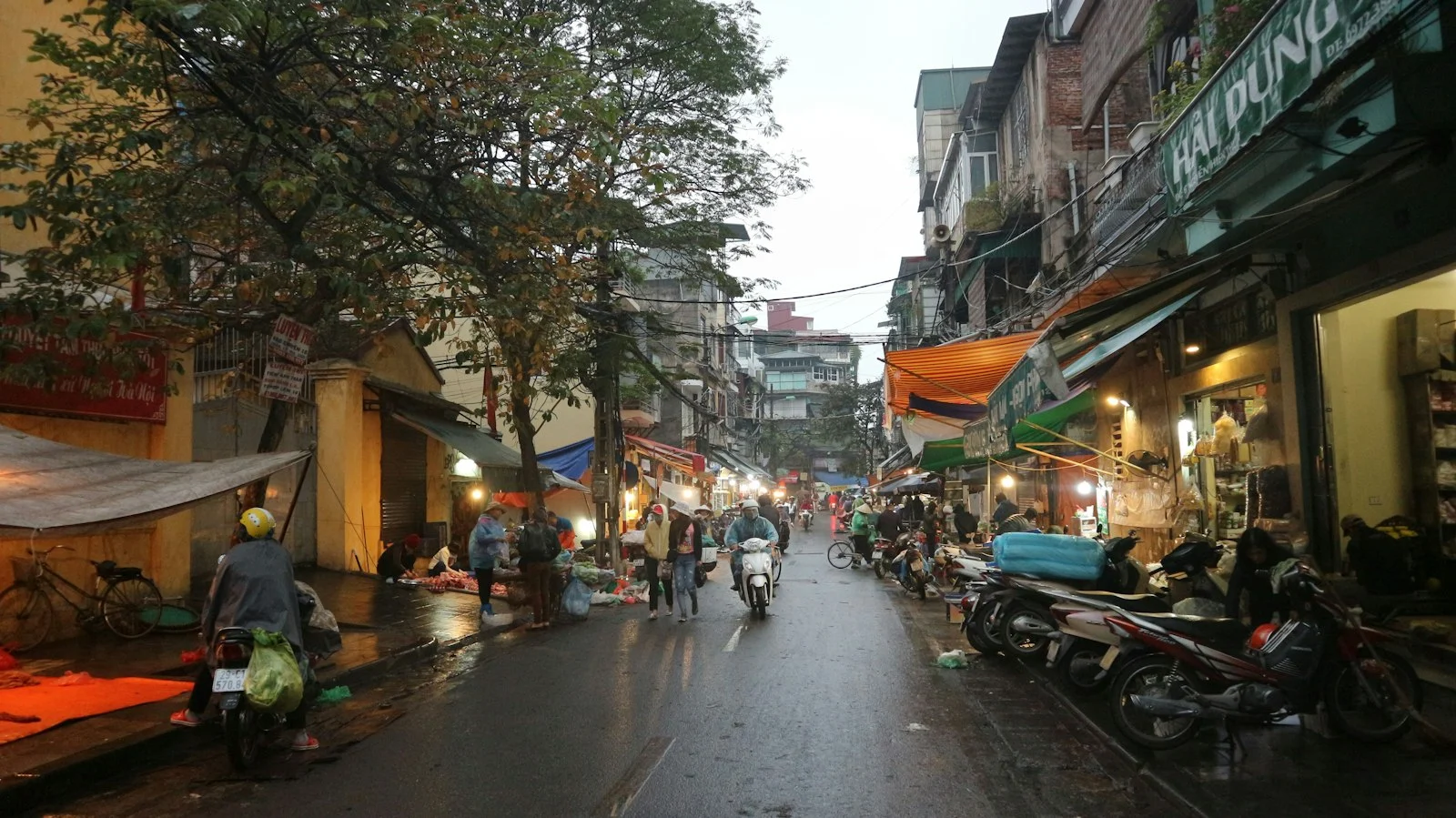
Riding a motorbike in Hanoi’s Old Quarter is slow and crowded, but manageable once you know the local habits: move with the flow, use the horn to say “I’m here”, follow the one-way signs and park with an attendant. This guide from Mr Tú covers what to expect, from your first junction to your first downpour.
Before your first ride
Table of contents12
A little preparation makes the first ride far easier.
- Check your licence. You need a licence that is valid in Vietnam for motorcycles, and you should carry it every time you ride. Our guide on how to rent a motorbike in Hanoi explains the rules, including the International Driving Permit.
- Fasten your helmet. Rider and passenger must both wear a helmet that meets Vietnam’s national standard, with the strap done up.
- Get a feel for the bike. Practise starting, braking and turning in a quiet spot before you head into traffic. If you have never ridden a semi-automatic, an automatic scooter is easier in stop-and-go streets.
- Pick a quiet time. Early morning, especially at the weekend, is the gentlest introduction. Leave weekday rush hours until you feel more confident.
How Hanoi traffic flows
At first sight, traffic in the Old Quarter looks chaotic. In practice it runs on a few unwritten rules: everyone moves at roughly the same steady pace, space is shared rather than claimed, and each rider watches the road ahead, trusting the riders behind to watch out for them.
- Be predictable. Hold a steady speed and a steady line. Sudden braking or swerving is what catches other riders out.
- Look ahead, check around. The traffic behind you adjusts to what you do, so focus on the road in front. Still, check your mirrors before you change position, and expect bikes to pass on both sides.
- Merge gradually. When you join a busy street or cross traffic, edge in slowly and let the flow adjust around you. A perfectly clear gap rarely comes.
- Leave room for bigger vehicles. Buses, trucks and cars don’t always give way to motorbikes. Give them space and don’t ride in their blind spots.
- Expect pedestrians anywhere. People step out from between parked bikes and street stalls. They usually cross at a steady pace and expect riders to steer around them, so slow down and give them room.
- Take junctions slowly. Vehicles may come from every direction at once, and some riders turn across the traffic early. Cover your brakes, make eye contact where you can and stop at red lights, even if others don’t.
- Watch the kerb. Close to the edge of the road you will sometimes meet a bike coming the wrong way.
The horn: a signal, not an insult
In Hanoi, the horn is a way of communicating rather than complaining. A short tap means “I’m here” or “I’m passing”, and you will hear it all day long. Use it the same way: briefly, when you overtake, approach a blind corner or an alley entrance, or see someone about to pull out without noticing you. A long blast is as rude here as anywhere else.
When you hear a horn behind you, don’t swerve or brake. Hold your line and let the other rider pass.
One-way streets and narrow lanes
Many Old Quarter streets are one-way, the permitted direction often flips from one block to the next, and some lanes are barely wider than a car. A few habits keep you out of trouble:
- Read the signs at every corner. A red circle with a white horizontal bar means no entry; a blue sign with a white arrow shows the direction you may ride.
- Trust the signs over your map. Navigation apps don’t always know the current one-way rules or temporary closures.
- Turned the wrong way? Stop, get off and walk the bike back to where you can turn around. Don’t ride against the traffic, even for a few metres.
- Share the space. With the pavements taken up by stalls, plastic stools and parked bikes, people walk in the road, so keep your speed down.
The weekend walking street
On weekend evenings, usually from Friday evening until late on Sunday, the streets around Hoan Kiem Lake and several nearby Old Quarter streets close to motor traffic and become a pedestrian zone. Barriers go up and traffic is diverted around the edges.
- Plan your route around the closed area rather than through it.
- Park outside the zone and walk in.
- Expect heavier, slower traffic on the streets around its edges.
- Collecting or returning the bike on a weekend evening? Confirm the meeting point with Mr Tú beforehand.
Parking: how “gửi xe” works
In the Old Quarter you rarely just leave a bike at the kerb. Instead, look for the words “gửi xe” (vehicle parking): it might be a courtyard, the ground floor of a building or a stretch of pavement run by an attendant.
- Follow the attendant. Ride or wheel the bike in and park where you are shown.
- Keep the ticket. You get a ticket, or a number chalked on the seat, and you need it to collect the bike.
- Agree the fee. Prices aren’t always posted, so ask before you walk away.
- Leave the steering unlocked if asked. Attendants often need to move bikes around to fit more in.
- Take your valuables. On most scooters the space under the seat can hold a helmet, but don’t leave phones, wallets or documents on the bike.
Where signs forbid parking on the pavement or at the roadside, don’t risk it: any fine during your rental is yours to pay. For the night, check with your hotel or guesthouse whether there is room inside for a motorbike and whether they charge for it.
Riding in the rain
Hanoi’s summer storms can arrive suddenly and hard, and the streets turn slick within minutes.
- Carry a poncho. Rain ponchos are sold all over the city. Keep one with you and put it on before the rain gets heavy.
- Brake earlier and more gently. Painted lines, metal covers and smooth paving get slippery when wet.
- Stay out of deep water. Some streets flood for a while after heavy rain. If you can’t see how deep it is, don’t ride through it: wait, or find another way.
- Be seen. Turn your headlight on and leave extra distance.
- Wait it out. In a real downpour, the easiest option is often to park, find a café and let the worst pass.
Riding at night
The Old Quarter stays busy late into the evening, and riding after dark calls for a little extra care.
- Turn your lights on and keep to low beam in town; high beam dazzles everyone in narrow streets.
- Watch for vehicles without lights and for people walking in the road.
- Later at night, some riders on the road have been drinking. Give others plenty of space.
- Never ride after drinking alcohol yourself, not even one beer: Vietnam treats drink-driving as a serious offence.
- Know your route back and where you will park before you set off.
Finding your way with Google Maps
A map app is the easiest way to get around, as long as you use it in a way that keeps your eyes on the road.
- Set the route before you start, and check it only when you have stopped at the side of the road.
- Use motorbike mode if your app has one. It suggests routes suited to two wheels. Some expressways and elevated roads are closed to motorbikes, so always follow the road signs.
- Download an offline map of Hanoi in case your mobile data drops out.
- Save your key places, such as your hotel and your hand-over point, before you go.
- Check the full street name. Many Old Quarter streets begin with “Hang”, after the goods once traded there, so names are easy to mix up, and streets often change name after a block or two.
- Keep the phone out of your hand. Never hold it while riding. If you use a phone holder, make sure it is firmly fixed.
Quick checklist before you set off
- Licence with you, plus your International Driving Permit if you use one.
- Helmets on and fastened, for rider and passenger.
- Enough fuel for your trip.
- Route set and phone charged.
- Mr Tú’s number saved in your phone.
- A poncho with you in the rainy season.
Plan your rental
New to renting in Hanoi? Start with our overview of motorbike rental in Hanoi, see how hand-over and return work on our page about renting near the Old Quarter, and when you collect your bike, work through our checklist for picking up a rental motorbike with us; it takes only a few minutes.
Leave room for a change of transport
A route that looked manageable before breakfast may feel unsuitable after rain or at a busy junction. You can park legally, take a break and complete part of the day by another mode of transport. Check the return appointment before changing the plan, and contact the rental business if it affects the agreed time. Do not continue merely to justify the rental cost. Keep the parked vehicle secure, retain any parking ticket and confirm the parking location in your phone before walking away.
Illustrative Hanoi street photo: Rizki Oceano / Unsplash. It does not depict a Mr Tú vehicle or premises.
Comments