
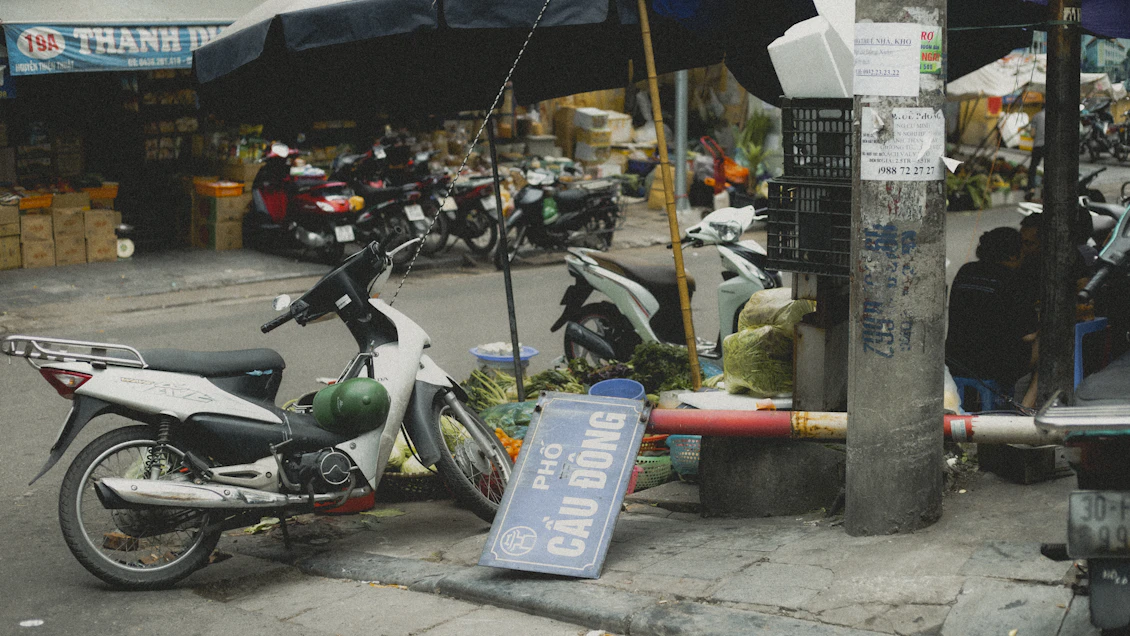
A first-time motorbike rental customer and a person learning to operate a motorbike for the first time are not the same. Someone who already rides competently and holds the appropriate legal credentials may simply need help understanding quotes and deposits. Someone who cannot yet control a bike should not hire one to practise on Hanoi’s busy streets.
This guide explains rental periods, refundable security deposits, model differences, fuel, parking, delivery charges and the handover process for people new to renting. The figures and contractual terms of Mr Tú cannot be assumed from general examples: request a current quote for the actual bike and dates.
New to renting is different from new to riding
Table of contents23
A visitor may have ridden motorcycles for years yet never dealt with a Vietnamese rental agreement. That person needs information about collection, insurance, return times and a refundable deposit. A genuine beginner who cannot brake, turn and observe traffic safely faces a different issue: training and legal eligibility come before renting for road use. A quick handover explanation does not make busy city streets a suitable learning ground. If you do not yet ride competently, choose buses, walking or a lawful driver-operated service instead of using a rental to experiment. All of the pricing comparisons below assume the customer may lawfully and safely operate the particular motorcycle.
Ask for a complete quote before comparing shops
A displayed daily rate may not include fuel, safe parking, delivery, pickup or the cost of returning later than planned. Provide the same details when requesting prices: vehicle category, exact start and finish times, addresses and intended travel area. Ask which accessories are included and whether the requested model is actually available. Keep the answer in writing. Someone new to hiring may compare two headline numbers without noticing that the agreements cover different durations or services. Comparing complete quotations avoids that mistake. A rate mentioned on a forum or another business website does not establish Mr Tú’s current prices or deposit.
Rental charge and refundable security deposit are different
The rental charge pays for using the vehicle under the agreed terms. A deposit secures specified responsibilities and may be returned after inspection, depending on the contract. Treat the refundable amount separately from final expenditure, but include it in the cash required at collection. Ask when the deposit is returned, what can be deducted, how the bike’s original condition is recorded and whether the shop gives a receipt. A low deposit does not automatically mean a low rental price. Conversely, a larger deposit may affect the money you can comfortably set aside even if it is later returned. Clear written conditions matter more than assumptions.
A daily rental needs precise start and return times
The word day does not prove that every booking covers exactly twenty-four hours; a provider may use a particular time window or return procedure. State the requested clock times and ask what happens after an agreed deadline. Someone who has a flight, work meeting or guided excursion later should allow time for collecting, parking and returning the vehicle. If only a brief ride is required, booking a vehicle with a driver may be more convenient than arranging a full rental. Request confirmation of the return location as well as the time. Avoid treating the lowest advertised daily price as a complete offer without these details.
Weekly rental can be convenient or wasteful
A customer staying several days may appreciate not having to collect and return the bike repeatedly. But the motorcycle can remain unused during walking tours, rainy days or intercity trips by train. A continuous weekly agreement may still charge for those days. Calculate genuine riding days, not just the total holiday length, and compare current weekly and daily quotes for the same model. Understand where the bike will be parked overnight and what early return or extension means. A discounted average day rate is not useful if the scooter creates more responsibility than transport value. The best duration follows an actual itinerary.
Monthly rental makes sense only with recurring use
A temporary worker or student may need reliable trips between an apartment, school and several regular destinations. Monthly rental can then be worth evaluating. However, the plan also requires secure parking, fuel or charging, maintenance communication, a breakdown procedure and a clearly understood end date. Dividing the quote by thirty days may hide the fact that the vehicle is ridden infrequently. If accommodation or daily travel habits are uncertain, a shorter initial arrangement may protect flexibility. Ask about renewal, early return, authorised destinations and vehicle inspection. Do not assume all shops use the same monthly rental and deposit structure.
A semi-automatic bike, scooter and electric bike have different terms
The specific model influences rental conditions, legal vehicle category, operating costs and the amount of equipment needed. A price for a semi-automatic motorcycle is not automatically valid for an automatic scooter. Electric vehicles raise battery, charging and range questions. Ask for the actual offered machine, its condition and relevant technical classification. Never accept a different motorcycle without confirming that the rider’s licence and skills match it. A picture on a website is not evidence of current inventory. A cheaper bike can be an unsuitable choice if its controls are unfamiliar or it cannot safely handle the intended route and luggage.
50cc rules need more than a simple advertisement
Vietnam defines a moped category using design speed as well as engine displacement or electric power. Under the road traffic safety law, eligible riders aged at least sixteen may operate qualifying mopeds when the applicable health, knowledge and riding-skill conditions are met. This does not mean every machine advertised as 50cc belongs to that category, or that a person who has never ridden can safely use it. Foreign visitors also need to clarify their own circumstances rather than relying on a shop slogan. Ask about the specific vehicle’s classification. Do not start practising in traffic because an advert says ‘no licence required’.
Motorcycles requiring a licence must match the document
For motorbike categories that require a licence, check the correct class, validity, age requirements and any transitional arrangements affecting older Vietnamese licences. Foreign customers need to verify recognition of their national and international documents, as relevant, for that precise motorcycle class. A driving licence for cars does not automatically qualify the holder for every powered two-wheeler. Commercial permission to hire a bike is not an official determination of driving rights. When the matter is unclear, stop the self-drive plan until qualified authorities confirm it. A rental fee or deposit cannot replace a missing legal entitlement.
Do not hire a motorcycle to learn on crowded city roads
Braking smoothly, turning, controlling the throttle and judging other road users should be learned with appropriate supervision in a suitable training environment. Crowded Hanoi streets are not an acceptable substitute. A small engine or a few minutes of instruction at the handover does not resolve the problem. For someone still learning, other travel methods are available while training takes place separately. Even a legally permitted low-capacity vehicle requires knowledge of traffic rules and control skills. No price reduction makes it sensible to risk an accident just to make use of paid rental time. Distinguish learning goals from travel needs.
Delivery to accommodation can change the cost
A first-time rental customer may expect the vehicle to be delivered to a hotel, but availability, service area, collection address and any charge depend on the provider. State the exact address and requested time. Ask whether returning elsewhere changes the arrangement. Delivery to an airport or a distant district should never be assumed to be free. Collecting from the shop may have its own travel cost and time requirement. Compare the two options as complete plans. If the provider confirms delivery, keep the written terms so there is no surprise at the final inspection or handover. A clear quote protects both sides.
Mr Tú’s delivery policy: delivery to your address is only available for monthly rentals; for short rentals of a few days you collect and return the bike at Mr Tú, 17 Phúc Tân, Hoàn Kiếm. Details are on motorbike delivery and collection.
Fuel and charging are separate operating expenses
For petrol scooters, note the fuel level at collection and ask what level should remain at return. Do not assume that a rental fee includes unlimited petrol. On electric models, inspect the battery, ask about safe charging, supplied accessories and realistic range. A place to charge cannot be presumed available at every hotel. Operating costs depend on route, traffic and actual vehicle condition, so a fixed daily figure would be misleading. Keep them in a separate budget column from the rental charge and deposit. If a planned outing is long, make sure the vehicle’s range and refuelling arrangements are adequate beforehand.
Parking and overnight storage deserve a budget line
Ask whether your hotel or apartment has authorised motorcycle storage, opening hours and a charge. Each attraction may also require a separate parking fee and some walking from the parking facility. Do not block emergency exits or park where prohibited to avoid a fee. A bike that cannot be stored safely may not be practical even if the rental rate looks attractive. Consider the whole day, including repeated parking tasks, not only travel time. Someone staying in a walkable part of Hanoi may find it easier to combine walking with occasional booked transport. Parking is part of the economic and practical comparison.
Inspect the vehicle before accepting the keys
Look at the tyres, brakes, mirrors, lights, horn, starting system and fuel or battery indicator. Photograph scratches and the general condition with the shop so the original state can be checked at return. If something appears unsafe, ask for it to be fixed or for another suitable model before using the vehicle. A new renter need not be a mechanic to notice obvious damage, but should not undertake repairs beyond their knowledge. Check that the helmet fits and the necessary controls are understood. Paying a deposit is not a reason to take a dangerous bike onto public roads.
Clarify helmets, locks and other accessories
The rental handover should describe how many helmets, keys, locks or other items are provided, if any, and whether optional accessories have a charge. A photograph showing rainwear or storage equipment is not proof those items are included. Check helmet condition and fit. Record what was given so both parties can compare the inventory during return. Do not attach heavy luggage where it interferes with steering, visibility or balance. Equipment helps a competent rider but cannot substitute for experience. If you are uncertain how an unfamiliar control works, ask before leaving the shop and do not begin riding until the vehicle can be used safely.
Road distance, destination limits and breakdown help
A daily or monthly rental agreement does not necessarily allow travel to every province, unlimited kilometres or free roadside recovery. Tell the provider which locations you intend to visit and ask about any geographic restrictions. Understand whom to contact for a puncture, failed start or other fault, especially beyond the city. Some assistance may be available only under specified conditions. For a new customer, a simple lawful itinerary may be easier to manage than a long unfamiliar trip. If a route is beyond the rider’s confidence, bus, train or a driver-operated vehicle could be preferable. Never infer contractual benefits that have not been confirmed.
Late returns, changes of dates and refunds
Weather, flights and work appointments can alter a trip. Before paying, ask whether extra hours are billed, how to extend a booking and whether early return changes the charge. There is no universal policy across rental shops. Confirm any amendment in writing, particularly when communicating in a second language. Avoid setting your planned return immediately before a departure flight. A low quoted price with restrictive changes might be less convenient than another clearly explained arrangement. Keep the contact details and the agreed return address easily accessible. The actual rental contract, not assumptions from a travel forum, should guide the payment.
Insurance and responsibility after an incident
Do not assume that every repair, collision or replacement vehicle is covered in the rental fee. Ask what insurance documents are relevant, what the renter is responsible for and how to report an incident. Different conditions may apply inside and outside Hanoi. Safety comes before financial improvisation: if a vehicle becomes unsafe, stop and seek appropriate assistance rather than riding on. Someone without sufficient skill should not view insurance as permission to practise in live traffic. Keep the agreed emergency contact and documents accessible. Understanding the responsibilities before departure prevents avoidable disputes if the rental ends differently from the original plan.
A simple formula for the real total cost
Write two totals. Estimated consumption cost equals confirmed hire charge plus fuel or electricity, authorised parking, delivery and any applicable extras. Initial money needed equals advance payment plus the security deposit. If the deposit is returned in full, it is not final spending; a legitimate deduction is recorded separately. Make comparison rows for one day, three days and a week using genuine quotations for the same bike. Include time spent collecting and returning it. Do not invent prices and present them as Mr Tú’s current offer. This method helps first-time renters compare choices while protecting their budget from overlooked conditions.
Compare renting with walking, buses and booked rides
A competent licensed rider who must reach many scattered destinations may value rental flexibility. Someone who only needs two short trips may find ride-hailing easier, while a person staying around central attractions may prefer walking. Operating buses and urban rail can also work when stops and schedules fit the journey. If the individual is not yet able to ride or legally entitled to operate that vehicle, self-drive rental must be excluded from the comparison. For qualified customers, use the same destinations and calculate door-to-door time, operating fees, waiting and parking. The cheapest headline rate should never decide the transport choice by itself.
A checklist before transferring a deposit
Confirm the actual model, availability, start and return times, hire amount, deposit, return process and applicable extras in writing. Then check the rider’s age, required licence and genuine ability to control the vehicle. Clarify parking, helmet, fuel or charging, condition at handover and the number to contact after a fault. Verify where any requested payment is going and keep a receipt. At pickup, compare the vehicle with what was agreed. If legal or safety information remains unresolved, postpone driving until it is cleared. A new customer should not be rushed into paying for a bike that is not appropriate for their skills.
Frequently asked questions for new customers
Can someone who has never ridden use a rental to learn in central Hanoi? They should not practise in busy traffic. Are all 50cc advertisements a guarantee of no requirements? No: classification, age, skills and legal conditions matter. Is the deposit a rental fee? No, it serves another purpose and may be refundable. Does a week always cost less than daily hire? Compare real riding days and current quotations. What if the bike is returned late? Follow the specific agreement. Can a foreigner rely on any international document? No; check legal recognition and the motorcycle category before riding.
Conclusion: rental is not a substitute for learning to ride
A person who is new to renting but already rides competently and has the proper legal qualifications can compare prices, deposits, parking, fuel and return rules. Someone who still needs to learn should not hire a bike as a substitute for instruction. Vietnam’s Law on Road Traffic Order and Safety and the 2026 official explanation of moped conditions are useful starting points. Ask competent authorities about specific driving eligibility and Mr Tú about current bikes, fees, deposit and handover terms.
Related cost guide: visitor motorbike rental price guide.
Suitability guide: whether motorbike rental is worth choosing for new riders.
New riders can read about documents, hand-over and safe riding in motorbike rental in Hanoi for first-time riders.

Comments