
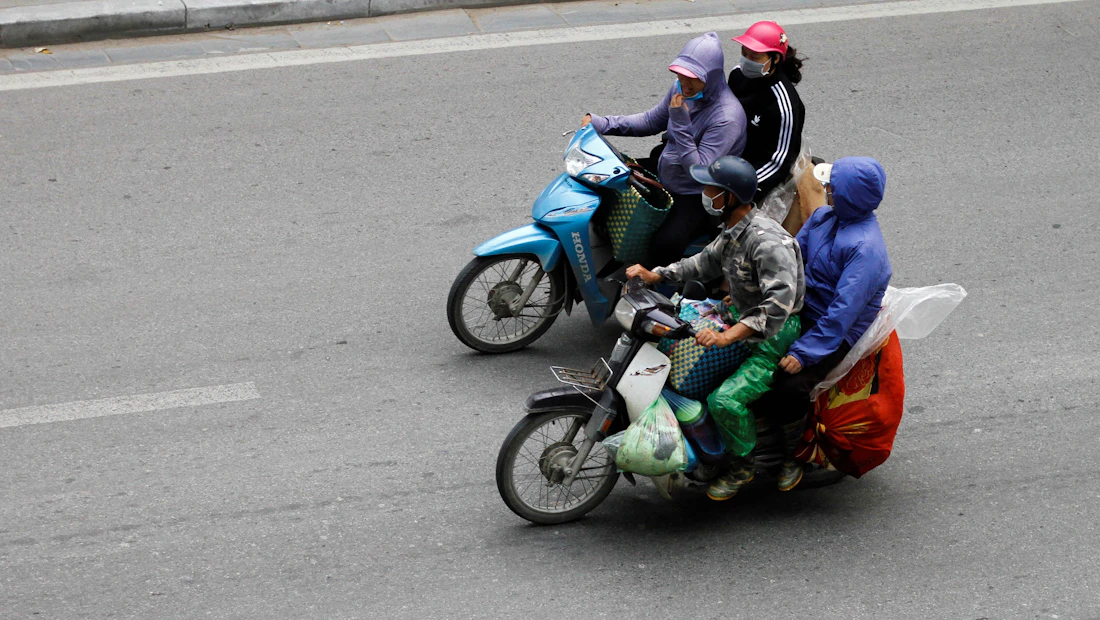
Renting a motorbike can make exploring Hanoi feel flexible, especially when a visitor wants several stops and a changing timetable. Yet it also brings responsibilities that a traveller using buses, rail, ride-hailing or walking does not face: driving in traffic, parking, protecting the bike and understanding the hire agreement.
This guide compares the genuine advantages and disadvantages of a motorbike rental with other ways to see Hanoi. It is not a promise that renting is cheapest or fastest, and it does not replace checking legal driving eligibility. Prices, deposits and actual rental services offered by Mr Tú should be confirmed directly rather than assumed.
Advantage: decide when each sightseeing journey begins
Table of contents24
A hired motorcycle available for an agreed period lets a properly qualified rider leave an accommodation or attraction without ordering a fresh trip every time. That can be useful for early photography, stopping at a market or changing plans after a recommendation from another traveller. Nonetheless, choosing a departure time does not mean all streets are open to motorbikes or attractions are operating. Traffic congestion and parking rules can still determine when you arrive. The benefit is genuine freedom to organise a day, but only if the traveller can ride confidently, legally and without placing speed ahead of safety.
Advantage: connect several destinations on a single outing
Hanoi sightseeing often involves more than travelling directly from a hotel to a single landmark. Someone may visit a museum, stop for lunch and continue to another neighbourhood. A rented scooter can make these changes less dependent on separate bookings. Every extra destination, however, requires finding a lawful parking place, securing the vehicle and sometimes walking from the park to the attraction. If an area restricts vehicles, a motorbike offers no magical access. Plan all your intended stops and estimate those hidden tasks before deciding a rental will make the whole journey simpler.
Advantage: change the route when a plan falls through
A traveller may discover that an attraction is closed, that a restaurant is crowded or that the weather favours a different location. Having a vehicle can make such switches convenient. But flexible plans also mean using navigation responsibly and recognising local one-way streets and traffic restrictions. Never handle a phone to check a map while actively riding; stop in a safe location before reviewing the route. If route changes require constant attention or cause anxiety, booking a vehicle with a driver may be more relaxing. Freedom should help the trip, not turn every hour into a driving challenge.
Advantage: avoid the commitments of vehicle ownership
Visitors who stay for a few days or weeks generally do not want to purchase and later dispose of a motorbike merely for transport. Renting can reduce that long-term commitment and allow the rental period to match the itinerary. However, hire fees are not the complete financial picture. Fuel or charging, parking, obligations for vehicle condition and any deposit must be understood. A traveller who uses the bike on only one day may find continuous rental less useful than using separate transport options. Compare how many journeys you actually plan, rather than assuming an available bike automatically provides value.
Disadvantage: the rider must manage unfamiliar traffic
Self-driving requires continual awareness of intersections, turning vehicles, road signs and pedestrians. Travellers who have ridden only in quiet areas may find busy Hanoi streets demanding. Even experienced riders can become tired after a full day of sightseeing. Unlike a passenger on a bus or in a vehicle with a driver, the person on the rented motorcycle cannot simply relax. The ability to stop and change transport is important. Never treat a good rental price as a reason to operate beyond your skill or while fatigued. Legal permission and practical confidence must come before any savings.
Disadvantage: weather can interrupt a planned day
A scooter gives less shelter than an enclosed car when rain, heat or road spray become intense. People carrying cameras, electronics and travel documents need to protect their belongings from moisture. Severe rain and flooded streets can make certain journeys unsafe; do not ride into water of unknown depth to get more use from rental time already paid. Keep an alternative ready, such as a bus, booked car or indoor activity closer to the hotel. Ordinary rainwear may help with light showers, but it cannot make every weather condition appropriate for riding. Flexibility also means cancelling a ride.
Disadvantage: luggage is difficult to carry safely
A light daypack may be easy to manage on some bikes, whereas a rolling suitcase, fragile equipment or heavy shopping can make riding awkward or dangerous. Never hang substantial loads from handlebars or secure objects where they interfere with the rider or controls. Consider airport trips, hotel changes and a final-day transfer as separate needs from local sightseeing. A car with a driver is often better suited to extensive luggage. It is perfectly reasonable to use a rental motorcycle for a suitable day trip and reserve other transport for baggage-heavy journeys. Choosing one mode for everything is not required.
Disadvantage: finding safe, lawful parking takes work
A rental bike needs somewhere to be stored overnight and whenever you enter an attraction. Hotels may have restrictions and some sightseeing areas provide little suitable parking nearby. Searching for a space can consume the time gained by choosing independent travel. Check the accommodation’s parking policy and access hours before committing to rental. During outings, use permitted facilities and keep any parking ticket. Do not block shared entrances, escape routes or prohibited pavements. If parking requires long diversions or constant worry, a bus, a walking route or ride-hailing might be far more pleasant.
Disadvantage: rental conditions remain your responsibility
A motorbike rental involves more than receiving keys. You need to understand the handover condition, agreed return time, how a breakdown is reported, any permitted travel area and what happens if the bike is damaged. Record existing marks at collection and retain relevant receipts. Do not presume that delivery, roadside rescue or free replacement is always included. A provider’s actual terms govern those questions. If a route leaves the city, disclose the intended destination before departure and get confirmation that it is permitted. The more spontaneous the trip, the more important clear and accessible contract information becomes.
Alternative one: explore nearby attractions on foot
Walking can be excellent when several sights are close together, particularly in pedestrian-oriented or vehicle-restricted parts of central Hanoi. You can pause for photographs, enter a café and change direction without returning to a parked motorcycle. The limitations are distance, heat, rain, accessibility needs and luggage. Assess the real pedestrian route and crossings rather than calculating only straight-line distance. For clustered attractions, walking may provide more freedom than having to find several parking areas in one afternoon. A booked ride can cover longer gaps without turning the entire day into a driving project.
Alternative two: use a bicycle or electric bicycle
Cycling can suit travellers comfortable with urban roads who want a slower experience with relatively little luggage. An electric bicycle may reduce the effort needed on a route, provided battery condition, charging facilities and lawful vehicle classification are suitable. Both still require good brakes, attention to traffic and somewhere to park securely. Rain and intense heat may reduce enjoyment. Do not confuse electric bicycles and electric motorcycles: their technical categories and legal conditions can differ. Choose based on the specific model and road environment, rather than assuming any cycle is safer or more accessible than a motorbike.
Alternative three: choose a practical bus route
A bus removes the need for the visitor to personally operate or safeguard a hired motorcycle. It can work well when stops and operating times match the sights being visited. On the other hand, walking to stops, waiting and changing routes may take considerable time, especially for a day of many scattered attractions. Calculate the whole journey rather than just the time the bus moves between two stops. Check current operator information, including actual routes and service hours. An old travel blog’s route diagram should not be treated as definitive. A bus can be part of a flexible itinerary rather than its only method.
Alternative four: look for operating urban rail services
Where an operating urban rail station is conveniently located, rail can cover part of the journey without the visitor needing to navigate dense street traffic personally. Access depends on the actual station locations and current schedules, not on proposed future lines. You may need to walk or use another service at either end, and those connections should be included in the time calculation. There is no reason to assume every Hanoi neighbourhood already has a practical rail link. Some sightseeing days may suit public transport, while others may be easier with a different choice. Compare the real route.
Alternative five: use ride-hailing or a taxi
A ride-hailing motorcycle, taxi or other lawful driver-operated service lets visitors arrange individual journeys without storing or returning a rental bike. An enclosed car may be more comfortable with rain, luggage or family members. The limitations include waiting times, availability and the cumulative price of multiple bookings. No reliable blanket rule says ride-hailing always costs more or less than renting. List every planned outward and return journey, use current quotes and compare like with like. Pay attention to safe pickup and drop-off places. The value is not only price but also reduced responsibility for operating the vehicle.
Alternative six: book a private vehicle with a driver
Families and groups with luggage may value travelling together in a single vehicle. A driver-operated car can simplify coordination and allow the group to focus on the visit, while avoiding the need for several participants to hold valid motorcycle credentials. Potential drawbacks include price, waiting arrangements and access limitations on some narrow streets. Obtain a quotation for the actual group size, route and time rather than inventing a generic daily price. For children, older travellers or a multigenerational group, comfort and organisation may matter more than the appearance of independence offered by renting several scooters.
A single attraction and a multi-stop itinerary are different
If today’s only plan is one museum and a return to the hotel, arranging a booked trip may be simpler than collecting a rental motorbike, inspecting it, parking at the destination and returning it. A day with several widely dispersed stops may place more value on independent transport. Yet multiple stops also mean repeated parking tasks and potential charges. Write down the destination sequence, opening times and places where motorbikes can legally stop. A map showing short distances cannot by itself reveal the total effort. The correct option depends on the actual activities planned.
Compare door-to-door time rather than vehicle speed
Rental motorbike travel includes collection, preparation, finding fuel if needed, obeying traffic, parking and walking to the attraction. Bus or rail travel includes reaching the stop, waiting, any connection and the final walk. Ride-hailing includes the time needed to book and meet the driver. A fair comparison uses the same origin, destination and time of day. If the bike reaches a busy street slightly faster but needs a long parking search, it may lose the advantage. Measuring the whole journey makes it easier to choose an option that preserves time for sightseeing rather than transport administration.
Compare the complete cost over the same itinerary
For each option, use the same days and planned journeys. A rental calculation includes the confirmed hire quote, fuel or charging, authorised parking and relevant extra fees. Record refundable deposits separately as upfront funds, not automatically as final expense. Buses and trains require counting relevant fares and transfers; booked rides require every trip, including returns. A private vehicle quote should identify waiting and other included services. For the rental-specific calculation, consult the earlier motorbike rental price guide for Hanoi visitors. Do not rely on invented or outdated prices.
Safety and lawful riding are non-negotiable
Whether someone can rent a vehicle commercially is separate from whether they may ride it on Vietnamese roads. Check the rider’s age, licence recognition, correct vehicle category and genuine riding competence. Foreign visitors should not assume any document called an international permit is sufficient without verifying the legal basis and associated national licence. Marketing language about 50cc bikes is not a substitute for legal analysis. If eligibility or experience is uncertain, choose walking, public transport or a service with a qualified driver. The savings from rental cannot compensate for illegal or unsafe driving.
Mixing transport modes often makes more sense
A traveller could walk around nearby historic streets on one day, use buses or rail on another, arrange a car during heavy rain and rent a motorcycle only for suitable outings when they are fully eligible to ride. This combination offers resilience and avoids relying on one mode under every circumstance. The financial outcome still depends on the contract: a bike hired for a continuous period may be charged even on unused days. Check rental duration and return rules before deciding a hybrid strategy will save money. The practical aim is to protect the enjoyment of the trip, not maximise motorbike hours.
A quick comparison matrix by travel needs
For nearby sights and light luggage, start with walking. For destinations well served by current bus or rail routes, examine public transport. For airport transfers, children, heavy bags or visitors who do not want to ride, consider a car with a driver. For many scattered stops and a competent, legally permitted rider with lawful parking, rental can be worth assessing. For those interested in cycling, verify the route and bicycle suitability. These are prompts rather than rules. The actual conditions of the roads, weather and each traveller’s health can change the answer on any given day.
Seven questions before committing to a mode
Are you legally permitted and able to operate the proposed motorcycle? Does your accommodation provide permitted parking? How many journeys really need a personal vehicle? Are vehicle restrictions present at your destinations? Is the weather suitable for riding? How will you return to the hotel if the bike fails? What is the complete cost compared with other options? Answer using real details of the itinerary instead of general travel promises. If the legal or basic safety answer is uncertain, pause the rental decision until it is clarified. Other conveniences cannot cancel that condition.
Frequently asked questions about alternatives
Is renting always cheaper than taking taxis? No; the answer depends on journeys, duration and confirmed quotes. Is a motorbike required for Hanoi’s Old Quarter? No; walking is useful for many nearby locations. Should a rider continue during flooding because a rental is paid? No, unknown floodwater is dangerous. Are buses always inconvenient for visitors? No; it depends on route and current service hours. Can foreign tourists ride? Only if applicable legal rules and documents allow the specific vehicle. Does a 50cc description settle the issue? No. Request actual rental conditions from the provider.
Conclusion: choose the trip rather than one transport mode
Renting offers control over departure times and multiple stops, but brings responsibility for driving, weather exposure, parking, luggage and a contract. Walking, cycling, buses, rail and driver-operated services each have strengths. The best sightseeing day is not necessarily the one involving the most self-driving. If you first need to assess whether you personally should hire a bike, read our Hanoi visitor rental suitability guide. Then compare actual costs and seek a current vehicle-specific quotation from Mr Tú. Keep a backup transport plan for days when riding is unsuitable.
Related pricing guide: rental costs and security deposits for foreign visitors in Hanoi.
Once you have weighed the alternatives, visit the Mr Tú motorbike rental page.

Comments