
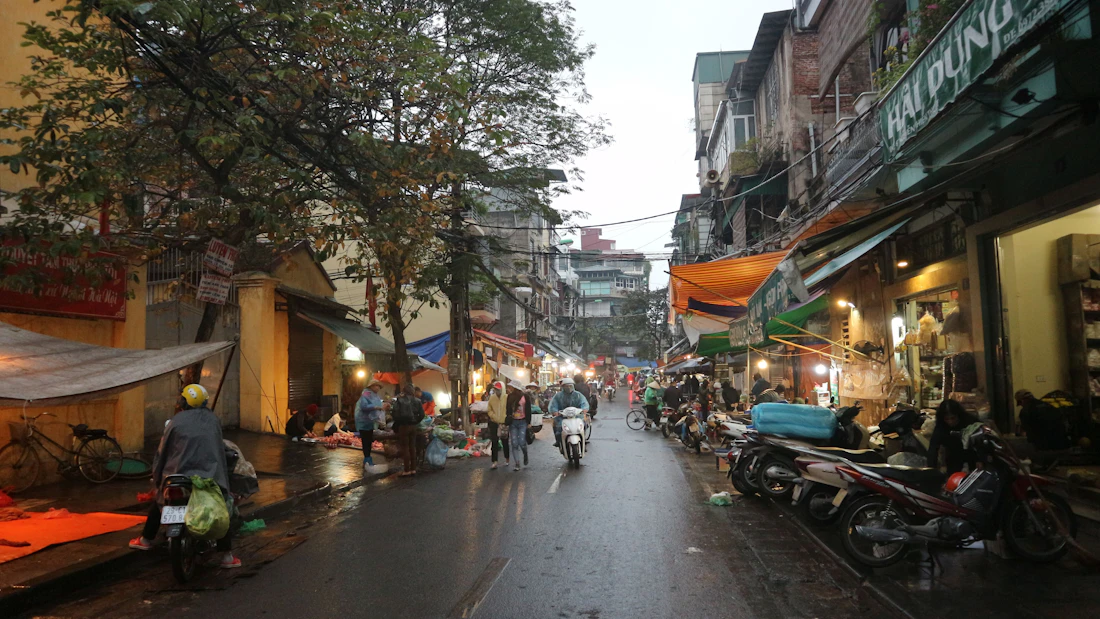
A suitcase, travel backpack and shopping bags can change the economics of motorcycle hire in Hanoi. A low daily rate is not the complete answer if the load is bulky, the passenger seat must remain free, the hotel has no parking, or a car is needed to carry everything to the accommodation.
This guide distinguishes hire charges from refundable deposits and explains how to compare a scooter, luggage storage and driver-operated transport. It does not invent current Mr Tú prices: the specific vehicle, dates, pickup arrangements and agreed deposit must be confirmed with the rental provider.
When luggage turns a motorbike into the wrong choice
Table of contents21
A compact daypack may be manageable on a suitable bike operated by a qualified, competent rider. A large wheeled suitcase, several shopping bags or fragile equipment may not be. First assess dimensions, total weight, passenger needs and the places where the luggage could be securely stored. A motorbike has neither the luggage compartment nor the weather protection of a suitable car. Do not choose the bike first and improvise a tower of bags afterwards. For a flight arrival or hotel move, one booked car can be a more realistic part of the travel plan. The lowest advertised hire rate is irrelevant when the baggage cannot be carried lawfully and safely.
Vietnamese law limits the size and handling of loads
Article 33 of Vietnam’s Law on Road Traffic Order and Safety states limits for loads on motorcycles and mopeds: no more than 0.3 metres outside the designed luggage rack on either side, no more than 0.5 metres beyond its rear, and a load height no more than two metres above the road surface. These are maximum dimensions, not an assurance that any package within them is safe. Article 47 also requires cargo to be secured, not exceed permissible vehicle weight and not obstruct the rider’s view, lights or registration plate. A rider or passenger must not carry bulky objects in a dangerous manner. Verify the actual rack and vehicle specification.
Vehicle load capacity is different from external size
A case could fit dimensional limits but still exceed the bike’s safe payload after the rider, passenger and other bags are included. Different motorcycles have different manufacturer capacities and handling characteristics. Ask about the exact model rather than assuming all automatic scooters have identical storage or braking performance. Loading high or unevenly can alter balance during low-speed turns and emergency braking. A full passenger seat is not an appropriate substitute for a certified cargo rack when someone is supposed to ride there. If the provider cannot confirm a safe arrangement for the weight and shape of the luggage, choose dedicated luggage transport. Technical limits should never be negotiated away through the rental price.
Compare a small backpack with a rigid wheeled suitcase
A well-contained backpack and an oversized rigid suitcase create different problems. Backpack straps can dangle near wheels or controls and need careful management. A suitcase may be too wide to fit a scooter’s under-seat compartment, even if photographs make that compartment seem large. Wheels and corners can prevent it from sitting securely. Measure the bags and record their approximate weight, not just the word luggage. Tell the business whether there is a passenger and whether equipment must remain dry. A photograph of the actual bags can make a consultation much clearer. If the load is impractical, storing the bag at the hotel is better than finding makeshift straps.
Rental rates depend on the bike and agreement, not a guessed luggage fee
Some providers quote by model and duration; additional equipment, delivery or special arrangements may have separate conditions. It is wrong to state that every extra suitcase automatically increases the rental cost, and just as wrong to promise free luggage accessories. Ask for a full price for the actual motorbike, hire period, pickup and return locations and any equipment the provider confirms. A larger vehicle may have a different rate, but it still must be technically suitable for the load. Never treat prices published by another shop as Mr Tú’s current offer. A written quote is the evidence to use in a real budget.
The rental payment and security deposit are different things
The hire payment covers the period of agreed use. A security deposit is held against contractual obligations and may be returned according to the agreement and the condition of the vehicle. Although travellers need funds to provide it initially, it should not automatically be treated as final travel spending. Ask about refund timing, recorded damage and the responsibility for any accessories or storage fittings. Photograph the bike and document existing scratches before departure. A low hire fee can still require more money on collection because of the deposit, so keep initial cash required and final expenditure on separate lines. Do not invent deposit figures for a particular business.
A simple method to calculate the entire trip
Expected spending equals the confirmed hire charge plus fuel or charging, authorised parking, applicable delivery and other clearly agreed extras. Funds needed at collection include prepaid amounts and the refundable deposit. Add a separate row for a car transfer if the large suitcase is moved to the hotel that way. Compare the total across three real itineraries: self-drive with an acceptable small load, car transfer followed by light-luggage motorbike days, and driver-operated transport for all journeys. Do not fill in hypothetical prices as though they were an official quotation. The result should include the time needed to collect and return the vehicle as well as direct cash expenses.
A one-day rental does not mean carrying bags all day
Someone checking out of a hotel may be tempted to keep the suitcase on the scooter until an evening train. Before booking, ask whether the accommodation has an agreed luggage-storage service after checkout. If storage is available, the traveller might make a light-luggage outing and collect the suitcase later using a suitable vehicle. Confirm the hire provider’s actual start and end hours; a quoted day is not necessarily twenty-four unrestricted hours. Allow time for collecting bags, returning the motorcycle and reaching the station or airport. A delayed return can affect contractual charges. Planning the handovers may save more hassle than fitting one more bag onto the bike.
Long stays should separate the moving day from daily commuting
A visitor staying in Hanoi for several weeks may arrive with heavy suitcases but only travel with a small bag on ordinary days. It makes little sense to choose a difficult-to-handle scooter for an entire month solely to accommodate one relocation. Move the suitcases with an appropriate service, then evaluate a motorcycle that fits the everyday commute and the rider’s legal qualifications. Compare daily, weekly and monthly terms using confirmed quotations and genuine riding days. Ask about parking, renewal and early return. An average daily price is not useful if the vehicle mostly remains parked while the traveller walks or uses public transport.
Airport arrival is a separate luggage journey
After a flight, a traveller may be tired, unfamiliar with the roads and carrying identification, fragile belongings and multiple bags. Riding an unfamiliar rental bike with all of that luggage is rarely an efficient first step. A booked car of an appropriate size can move everything to the accommodation. Later, once rested and with bags safely stored, the person can decide whether a motorcycle is needed for local travel. If hotel delivery of a rental is offered, verify the address, times and actual fee rather than assuming it is free. This division keeps the suitcase transfer separate from independent transport and avoids improvising dangerous loads.
Changing hotels with luggage requires a different plan
When moving between Old Quarter accommodation and another Hanoi district, two or three rigid bags can make a motorcycle unrealistic even for a skilled rider. Ask whether the new hotel accepts early bags and offers authorised motorcycle parking. A car can carry the bags, while a motorcycle may be used on a different day for suitable trips. If the bike is to be returned to another address, the hire provider must confirm that the arrangement is allowed. Do not assume citywide drop-off is included. A separate transfer fee can be worthwhile if it avoids unsafe fastening, repeated unpacking and the risk of missing a check-in time.
Two people and several suitcases amplify the problem
A rider, one pillion passenger and large suitcases bring passenger rules, total weight and cargo restrictions together. The passenger must not hold an unwieldy package that jeopardises balance or blocks the rider. The luggage cannot simply occupy the passenger’s footrests or cover rear lights and the registration plate. Even hiring two motorcycles is not a universal solution because each has its own carrying and driver-licence limits. For two adults with flight luggage, a driver-operated car generally deserves serious consideration for the transfer. Any later motorcycle use can be restricted to light daypacks, if the riders are qualified and the vehicle is appropriate.
A large-looking under-seat compartment may still be too small
Marketing pictures do not give reliable internal dimensions for a hard-sided suitcase. A curved opening, hinge or battery compartment can reduce usable space. Ask for the specific motorbike model and check the compartment before assuming luggage will fit. Never leave the seat partially open or tie the lid closed around an oversized case. Laptops, cameras and passports may also need different secure storage and should not automatically be left inside a parked scooter. When storing bags at accommodation is available and acceptable, that may be more useful than paying for a larger motorbike. Security and accessibility of belongings matter as well as volume.
Straps and cargo boxes cannot eliminate load limits
Tie-down straps are useful only with correct attachment points, secure packing and a load already permitted by law and the manufacturer. Loose cord ends can become caught near moving parts. A poorly mounted box may raise the centre of gravity or obstruct seating. Do not attach luggage to handlebars, mirrors or equipment never intended to support it. Even a strongly secured suitcase can still be too heavy or too wide. If the provider does not supply suitable approved equipment, do not improvise a dangerous replacement on the street. Use an appropriate luggage vehicle instead. Paying for accessories never changes the motorcycle’s technical carrying capacity.
Fragile electronics should influence transport choice
Cameras, laptops, musical instruments and medical equipment may be vulnerable to vibration, rain or impact. A soft case on a rack may not provide enough protection, while a rigid case can be bulky and hard to secure. Protect sensitive items with appropriate packaging and do not leave valuables unattended on a parked bike. When equipment is heavy or particularly important, a suitable car or professional goods transport may be worth more than any theoretical saving from a low motorcycle hire fee. Confirm that the vehicle can be driven safely with the remaining load. Reliable travel includes getting belongings to the destination intact.
Luggage storage and motorbike parking are separate services
A hotel may agree to hold suitcases but have no motorcycle parking, or may offer vehicle parking but no bag-storage service after checkout. Ask both questions explicitly, including operating hours, responsibility and any applicable charges. On sightseeing days, find authorised bike parking and avoid leaving large bags exposed on a vehicle in public. When bags can be securely stored at the hotel, daily movement becomes simpler and the right type of transport can change. Do not assume every accommodation provides either service free. Storage arrangements belong in the itinerary before any refundable rental deposit is paid.
Heavy rain makes external luggage even harder to manage
A waterproof jacket does not guarantee that luggage strapped to a motorcycle stays dry or that visibility remains safe. Loose covers may flap into lights or controls, and wet roads can make a heavily loaded bike harder to handle. Never enter floodwater of unknown depth to keep a schedule or make use of a prepaid hire period. If the traveller must arrive at a station with sensitive items or a large suitcase, a suitably sized car may reduce the risk. Keep an alternative travel option available for changing weather. Safety and the belongings’ condition are more important than using every hour of a rental agreement.
Inspect the bike and accessories at handover and return
Check tyres, brakes, lights, mirrors, ignition, storage compartment and existing bodywork marks. Record starting fuel or battery level and any agreed rack, top box or keys. If the bike has a cargo attachment, confirm how it is meant to be used and whether it can safely carry the planned load. Refuse to ride a visibly unsafe vehicle merely because payment was made. At return, remove every personal item from compartments, document the condition and obtain the deposit receipt or refund confirmation as agreed. Clear handover evidence can help prevent disputes about pre-existing marks or missing accessories.
Breakdown plans matter even more when carrying bags
Ask for the provider’s confirmed contact details, where assistance may be available and who is responsible for certain repairs or recovery. Do not assume free roadside rescue everywhere in Vietnam. If braking, tyre condition or stability becomes unsafe, stop in a suitable place rather than continuing with the load. A broken motorcycle can leave both the traveller and several bags far from the hotel, so keep a backup vehicle option in mind. Avoid repairs that exceed your expertise or contradict the contract. Notify the provider according to agreed procedures and ensure the luggage remains supervised and secure while arranging the next step.
A decision table for bike hire versus a car
Start with legal entitlement and riding skills, then check cargo dimensions, combined weight and secure attachment. These are pass/fail conditions, not points offset by saving money. Next consider luggage storage at the hotel, weather, number of actual rides and the provider’s confirmed fees and deposit. If the bag is too bulky or exceeds limits, remove motorbike self-transport from the viable choices. With only a small backpack and several independent trips, hiring a suitable bike may be useful. With two large suitcases and a hotel change, a car with a driver can be a more fitting solution. Compare door-to-door time, not just advertised daily rates.
Checklist and frequently asked questions
Before contacting the shop, list each bag with size and approximate weight, number of riders and passengers, intended routes and collection times. Ask for the exact motorbike, permitted load, suitable storage, hire cost, refundable deposit, authorised parking and support conditions. Does every suitcase fit under a scooter seat? No, dimensions vary. Does the deposit always become an expense? No, it may be returned under the agreement. Are any tie-down straps lawful for any load? No, weight, dimensions and secure positioning remain important. Should two adults move airport luggage on one bike? Consider a suitable car rather than improvising. For the legal rules, read Articles 33 and 47 of Vietnam’s road traffic safety law. Ask Mr Tú for actual availability and prices.
Related guide: alternatives when two people travel together.
Who should rent: when motorbike rental with luggage is actually worth choosing in Hanoi.
To plan the bike and pickup around your luggage, see motorbike rental options in Hanoi.
Comments