
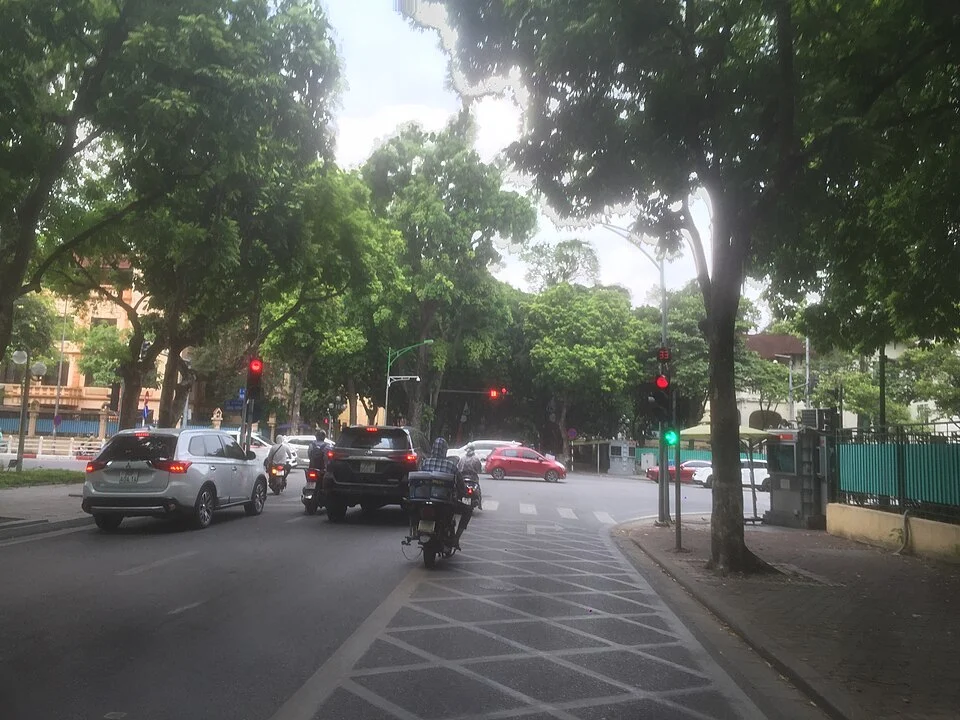
Riding to Phan Đình Phùng Street requires a little more planning than reaching an ordinary map pin. The roughly 1.5-kilometre avenue between Mai Xuân Thưởng and Hàng Cót is described as one-way and is known for mature trees, the Northern Gate and Cửa Bắc Church. Whether you start in the Old Quarter, Long Biên or Trúc Bạch, choose the legally permitted entry and park before exploring the scenery on foot.
Where is Phan Đình Phùng Street, and why do both ends matter?
Table of contents25
Phan Đình Phùng Street is a broad, tree-lined thoroughfare in the historic Ba Đình area of Hanoi, on the northern side of the old citadel. Sources describe it as approximately 1.4–1.5 kilometres long, extending between Mai Xuân Thưởng in the west and the Hàng Cót/Hàng Đậu side in the east. It crosses important streets such as Hoàng Diệu and Nguyễn Tri Phương, while Cửa Bắc Church and the historic Northern Gate stand nearby. The location is picturesque, but a map pin in the middle of the street does not indicate the correct entry point for your motorbike. Before travelling, decide whether you want to ride legally along the avenue or park somewhere suitable and walk. The distinction can save several unnecessary turns through central Hanoi.
Check the one-way direction before choosing an approach
VietnamPlus described Phan Đình Phùng as a one-way street running from Mai Xuân Thưởng towards Hàng Cót in its feature about the city’s autumn avenue. This is valuable background, particularly if you are approaching the eastern side from the Old Quarter. But a published travel article should not be used instead of today’s regulatory road signs, traffic police instructions or any temporary diversions. Check the direction permitted for your vehicle as you approach the junction. If the nearest end is not an entrance for your direction of travel, use the legal connecting road network rather than riding against traffic. Do not make a sudden U-turn, mount the pavement or follow a pedestrian navigation instruction on a scooter. The shortest line on the map is not always a lawful route.
From the Old Quarter: do not assume Hàng Cót is the entry
People staying in the Old Quarter often notice that the Hàng Cót and Hàng Đậu side looks convenient. However, the point closest to a hotel may be the wrong end of a one-way street for a rider planning to travel its full length. Open your navigation application with your real accommodation address and choose a suitable motorbike mode. Follow the current one-way and turning signs, even if the app gives a strange-looking detour. Some Old Quarter streets are narrow, and it is easy to overlook a prohibited turn while looking for the tree canopy. You may find that leaving the vehicle in a lawful facility and walking is more efficient than driving around the district. If your aim is photography, arriving close to a public footpath matters more than approaching the exact midpoint by motorbike.
From Long Biên: think in three stages
When starting from Long Biên, split your journey into a permitted river crossing, a legal route into the central districts, and the final approach to Phan Đình Phùng. The appropriate bridge and lanes depend on your starting point, vehicle type and any current restrictions or works. Do not assume that every motorcycle, 50cc bike or electric vehicle can use every crossing and lane without checking. Once across the Red River, let the current road network guide you towards Ba Đình instead of following a fixed sequence of old turns. Allow a margin for junctions, congestion and parking. Long Biên itself covers many areas, so a universal journey time would be misleading. If you are riding a rented bike, also plan a safe return route and leave enough time to meet the agreed hand-back time.
From Hoàn Kiếm Lake and the central shopping streets
From the Hoàn Kiếm Lake area, consider the whole outing rather than simply counting kilometres. If your accommodation is very close to the Old Quarter, walking to the avenue or using another suitable method might be less troublesome than retrieving a scooter, navigating one-way streets and finding a parking place. If you intend to continue towards the western parts of Ba Đình, a motorbike might be useful as part of a longer day. Event-related pedestrian restrictions can affect central streets, especially on busy days, so check the arrangements that apply when you travel. Avoid assuming that a road used by walkers during a weekend event remains available to motorbikes. For riders unfamiliar with the city, it can be more enjoyable to complete the central sightseeing section on foot and keep the bike for trips outside the busiest streets.
From Trúc Bạch and Quán Thánh: consider the western end
Visitors already in the Trúc Bạch or Quán Thánh area can compare a short walk with reaching the western Mai Xuân Thưởng side. In a city centre where one-way restrictions are important, approaching the right end can be more useful than reaching the closest-looking point on a map. However, the actual turns must be checked at the junction because rules can be changed for traffic management or construction. There is no need to ride the entire avenue if the goal is to appreciate its trees and historic buildings. Park somewhere authorised and take a manageable walk where conditions allow. If you add Quán Thánh Temple or a lakeside stop, check the venue’s opening arrangements separately rather than assuming that everything nearby is open at the same times.
Use the main intersections as orientation points, not shortcuts
The avenue meets Hoàng Diệu and Nguyễn Tri Phương and connects to several smaller streets as it approaches the eastern end. These are useful place names when checking whether you are on the correct part of the road. They do not imply that every intersection permits every turn. Read the one-way signs, lane markings and any directions from officers on duty. The road’s mature trees can draw your attention away from traffic, but the rider needs to focus on vehicles, pedestrians and junctions ahead. If you pass the place you wanted to photograph, continue to a safe legal stopping or parking location. A sudden stop or U-turn on a tree-lined boulevard puts other road users at risk and spoils the reason for visiting it in the first place.
The Northern Gate and Cửa Bắc Church are better explored on foot
A memorable section of the route contains the old Northern Gate of the citadel, commonly called Bắc Môn, and Cửa Bắc Church. Vietnam’s official tourism website recommends a walking route from Hàng Cót onto Phan Đình Phùng, stopping at these historic landmarks before continuing westward. That is a useful clue about how to enjoy the street: you can reach the area by motorbike, but the appreciation of architectural details happens on foot. Do not park at a church doorway, block a pedestrian crossing or assume the historic gate is an unrestricted motorbike entrance. Any interior access, religious services and visitor opening times must be confirmed separately. The Vietnam Tourism walking-tour guide explains the wider historical and lakeside context of this route.
The Hoàng Diệu junction and the Imperial Citadel connection
Phan Đình Phùng meets Hoàng Diệu near the historic citadel area, making the two locations natural companions for travellers interested in architecture and Hanoi’s past. But a visit to the Imperial Citadel is a separate activity with its own entrance, ticket arrangements and current opening conditions. A gateway visible from the street is not automatically a functioning admissions entrance. If this is your first visit, plan your citadel stop independently using our motorbike route guide to Thăng Long Imperial Citadel. For the Phan Đình Phùng visit itself, you can simply observe the public-facing buildings and the tree-lined street without buying an attraction ticket. When moving between sights, avoid leaving your scooter on a pavement because two locations seem close on a map.
Why parking is a separate task from getting there
A tree-lined pavement is not automatically a motorbike parking area. If you intend to spend more than a moment looking at the historic streetscape, identify an authorised, operating facility that accepts your kind of vehicle. Ask about charges, receipts and collection times before handing over the bike. Do not assume a car park also takes scooters, that a school entrance is available or that a quiet area beside an old villa is legal parking. A later article in this series deals specifically with parking near Phan Đình Phùng; this route guide deliberately avoids offering unverified parking names, prices or spare-capacity claims. You can use your phone to locate a lawful facility before setting out, but check the operator’s actual instructions on arrival. For rented vehicles, keep your receipt, remember the plate and check the return commitment.
The famous trees are scenery, not a reason to stop in traffic
The mature canopy is one of the street’s strongest attractions, especially when seasonal leaves change colour. Several travel descriptions show broad pavements and rows of trees, sometimes giving different counts depending on the section. Do not assume that every tree or viewpoint shown in an older photograph will look identical today. Weather, maintenance, storm damage and temporary urban works can change the experience. To photograph the avenue, choose a public place where standing is allowed and keep clear of vehicle lanes and driveways. Riding slowly while watching the treetops instead of the road is unsafe. The better approach is to park properly, carry your camera or phone on a short walk and observe the trees without blocking residents and other pedestrians.
Photographing Cửa Bắc without disrupting local life
The Northern Gate and the yellow exterior of Cửa Bắc Church offer very different architectural subjects. They also remain part of a living city, where local residents, religious visitors, students and commuters have their own routes. Keep clear of school gates and church entrances, especially during busy arrival and departure periods. Do not enter a place of worship during services merely for a picture, and follow any visitor rules displayed on site. A photograph across a busy road is not worth crossing outside a suitable point or standing in the carriageway. If you are travelling with children, agree on a safe walking area and keep them away from vehicle lanes. A respectful, slower visit usually produces a better sense of the district than taking hurried photos from the saddle.
Which time of day works best?
A pleasant visit depends on your group’s preferences, weather and the streets’ actual traffic conditions. Daylight makes it easier to observe the trees, old buildings and road signs. The area may be busier during school travel, commuting periods and popular photography seasons. No universal ’empty hour’ can be guaranteed. On a rainy day, consider reducing the walking part and checking the road surface carefully. During strong winds or storms, avoid spending time beneath large branches and do not force a planned photo stop. In hot weather, choose shade and rest breaks without blocking the pavement. The best time to ride is when you can travel calmly, follow the rules and retrieve your motorbike before the parking provider closes.
Motorbike types and the right to ride
Whether a vehicle is physically capable of reaching Phan Đình Phùng is different from whether a particular person is legally entitled to operate it. Check the current Vietnamese rules for your licence, age, vehicle category and any relevant foreign-document requirements. A 50cc bike may be less powerful than a larger scooter and should not be treated as ideal for every longer road route. An electric scooter needs sufficient range for the return journey, and a parking place does not automatically include charging facilities. Automatic motorcycles also require familiarity with braking and smart-key locking. If you are uncertain about traffic in central Hanoi or do not meet the legal requirements, walking, a taxi or another suitable transport option is preferable. Never read your phone while actively controlling a motorcycle.
What to do when an event or road closure changes the route
Temporary restrictions can make a perfectly reasonable route unavailable on the day. A police officer’s directions, road barriers and current signs take precedence over a previously saved path. If an intersection has a no-entry sign, do not follow a map instruction through it. Continue to the next lawful choice, even when that means a detour. If the approach to the street becomes difficult, choose a suitable legal parking location elsewhere and walk only if the distance is manageable. Do not ride on pedestrian-only pavements or use church courtyards as shortcuts. A flexible route is more reliable than rigid turn-by-turn instructions that may have been written before construction or special events. Build a backup into the plan rather than assuming every access point is permanently open.
Using this street as a gateway to a longer Ba Đình outing
Once you know how to reach Phan Đình Phùng, you can decide whether to devote the visit solely to the avenue or combine it with nearby cultural sights. The Imperial Citadel is a plausible option for people who want a deeper historical visit, provided its opening and access are checked. Our half-day Imperial Citadel itinerary is useful for planning that distinct activity. Do not try to fit the Old Quarter, Northern Gate, Trúc Bạch, multiple museums and the citadel into an arbitrary short time slot. Travel and parking time can dominate the schedule. A sensible first visit might consist of a safe arrival, one legal parking stop, a walk under the trees and one optional landmark. Leave other attractions for another occasion if the day is hot or busy.
Sources and a final pre-departure checklist
For location and road layout, consult Người Hà Nội’s street description and the VietnamPlus account of its historic one-way orientation. For a pedestrian perspective, Vietnam Tourism offers a route linking Hàng Cót, Northern Gate, Cửa Bắc Church and Trúc Bạch. Hanoi’s Decision 01/2026/QĐ-UBND, effective 15 January 2026, provides part of the broader regulatory framework for road vehicles but does not replace individual signs at a junction. Check the map, legal route, weather, vehicle documents and parking before leaving. This article does not guarantee traffic times, access to private sites or a specific parking price.
Compare the approach by starting point
| Starting area | Practical strategy | Check first |
|---|---|---|
| Old Quarter / Hàng Cót | Identify the legal entrance to a one-way street | One-way signs and turns |
| Long Biên | Legal river crossing, then Ba Đình | Bridge lanes and diversions |
| Trúc Bạch / Quán Thánh | Consider the Mai Xuân Thưởng end or walking | Actual intersection signs |
| Hoàn Kiếm Lake | Compare riding with walking or another mode | Event and pedestrian restrictions |
| Photography-only visit | Park lawfully and explore on foot | Parking ticket, opening time, safe walk |
Frequently asked questions
How long is Phan Đình Phùng Street?
Approximately 1.4–1.5 kilometres in published descriptions, between the Mai Xuân Thưởng and Hàng Cót/Hàng Đậu areas.
Is Phan Đình Phùng Street one-way?
VietnamPlus described it as one-way from Mai Xuân Thưởng towards Hàng Cót. Follow current signs and any temporary traffic directions.
Which bridge should I use from Long Biên?
That depends on your actual starting location, motorcycle type, permitted lanes and current restrictions. Check the route before travelling.
Can I stop beside the trees to take pictures?
Only where stopping or parking is permitted. For longer photography, use authorised parking and walk.
Are the Northern Gate and Cửa Bắc Church nearby?
Yes, both are landmarks associated with this street; access and visitor conditions for each should be checked separately.
Can I go there on a 50cc or electric bike?
Consider road rules, personal eligibility and the vehicle’s capabilities and range. Do not assume every bike or rider is suitable.
Before riding: check the street end you want, current one-way signs, the vehicle’s legal eligibility, an authorised parking option and the weather. The route may be changed by works or events.

Comments