
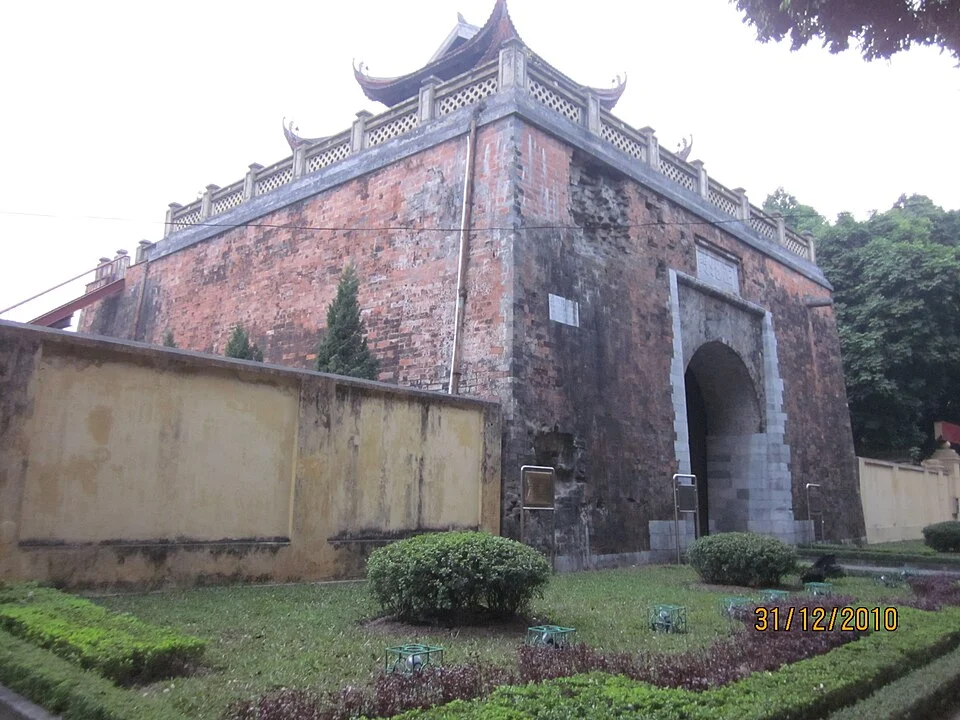
Motorbike route to Thang Long Imperial Citadel: head towards the official visitor address at 19C Hoang Dieu in Ba Dinh, follow lawful roads, verify a real motorcycle parking service and enter the heritage site on foot. Ordinary visiting hours are published as 8 a.m.–5 p.m. daily; neither parking availability nor a fixed parking fee can be guaranteed.
Begin with the correct entrance, not the middle of the map
Table of contents26
The Thang Long Imperial Citadel spreads across a historically important part of Ba Dinh, central Hanoi. Its official preservation centre lists the visitor address as 19C Hoang Dieu Street. That is a far more useful destination than a pin placed in the middle of an archaeological precinct. Saving the entrance address helps you distinguish the public visitor approach from separate buildings and controlled areas connected with the wider heritage property.
A motorbike trip should be planned in stages. First ride legally towards Hoang Dieu Street; next find a functioning facility that agrees to receive your motorcycle; then walk to the visitor entrance and follow the permitted tour route. The public gate does not automatically provide a motorcycle parking place. If the area is being rearranged for an event, obey current signs and ask authorised staff before committing to a narrow turn.
Check the actual opening programme before choosing a departure
The preservation centre’s public website currently states ordinary visitor hours of 8 a.m. to 5 p.m. every day. That is a useful baseline but should not be confused with guaranteed access to every exhibit, underground area or special programme. Conservation work, security requirements and ceremonies may restrict particular spaces temporarily. Travellers interested in a specific exhibition should consult the official website for the date rather than assuming an older itinerary is still current.
Allow time for more than the road journey. You may need to identify the parking operator, obtain a ticket, walk to the admission gate and decide which visitor areas are open. Arriving shortly before the general closing time is not a workable plan for a substantial heritage visit. Similarly, a museum’s opening window does not prove that an independently managed motorcycle park will remain staffed until the same minute.
Riding from Hanoi’s Old Quarter and Hoan Kiem Lake
If you are staying near Hoan Kiem Lake, the citadel sits to the west and north-west of many central visitor streets. Use current navigation to approach the Hoang Dieu area, but let one-way signs, temporary barriers and directions from traffic officers take precedence. In the city centre a road can look straightforward on a map yet only permit travel in one direction or be subject to an event diversion.
A useful way to plan the day is to treat each district as its own stop rather than expecting one parking ticket to serve several attractions. You might finish a lakeside walk before collecting your motorcycle and moving to Ba Dinh. If you are also considering a memorial visit, our Ho Chi Minh Mausoleum half-day itinerary illustrates why entrances, security and walking routes should be checked separately at every destination.
Coming from Long Bien across the Red River
The best bridge depends on where you start, the class of motorcycle you are operating and the restrictions in effect at the time. There is no safe universal instruction to take one named bridge from every part of Long Bien. Check active construction, lane rules and congestion before departure. A navigation estimate may omit time lost while approaching a crowded bridge or finding a legal turn after crossing.
Visitors who do not regularly ride in Hanoi should allow extra time and choose comprehensible junctions over improvised shortcuts through unfamiliar alleys. Stopping in a moving traffic lane to inspect your phone increases risk. Find a legal place to pull over instead. When approaching Ba Dinh, slow down and pay attention to signs around institutional and heritage areas; saving a few minutes is never a reason to enter a restricted lane.
Combining the citadel with the Temple of Literature
The Imperial Citadel and the Temple of Literature are different historical sites, even though both speak to Hanoi’s long political and educational history. A combined day can be rewarding if you allow time for separate admission, walking and parking. There is no reason to assume the ticket, operating hours or designated entrance at one location applies to the other.
Our motorbike guide to the Temple of Literature gives its independent access information. Comparing the two also helps avoid a common mistake: treating the map route between two tourist pins as though the visitor exits, pedestrian gates and motorcycle entrances must line up. Re-check traffic signs for the new leg of the journey, not merely the distance.
Three navigation checkpoints worth saving
Before you put on your helmet, save the Imperial Citadel as an attraction, 19C Hoang Dieu as the official visitor address, and a parking facility only after you have independently confirmed it operates and accepts motorcycles. These are separate functions. A map pin at the monument itself may guide you to a wall or an entrance for pedestrians, while a generic ‘parking’ label may describe car spaces or an outdated temporary arrangement.
Near the destination, look for a legally accessible place to stop and reassess. Do not ride onto a pavement or through an official gate because the route appears shorter. If attendants indicate an alternative visitor approach on the day, follow their directions. A small extra walk from a verifiable parking facility is normally easier to manage than leaving a hired scooter where its security and collection arrangements are unknown.
A first-time rider’s decision table
| Question | Grounded planning detail | Still needs checking |
|---|---|---|
| Where is the visitor address? | 19C Hoang Dieu Street, Ba Dinh | Which gate is admitting visitors today |
| What are usual opening hours? | 8 a.m.–5 p.m., daily according to the centre | Event-specific restrictions |
| How should I arrive? | Use lawful motorcycle roads towards Hoang Dieu | Current one-way and traffic controls |
| Where can I leave the bike? | No universally confirmed parking operator here | Place, charges, receipt and collection time |
| How long should I stay? | Depends on open exhibits and your interests | Actual visitor route and available time |
This table is intended to help visitors distinguish official facts from operational details that change. It is not a ticket, a reservation or evidence that a particular motorcycle bay is available. The safest approach is to combine the site’s verified public information with what is visibly authorised on the day. That principle also helps when temporary security arrangements alter which street you can reach.
Parking is a separate transaction from heritage admission
When you find an operator willing to take the motorcycle, ask how the fee is calculated, whether it accepts your vehicle type, whether the key is retained, and when the bike can be collected. Look for a traceable ticket or other formal acknowledgement. Parking on a pavement because other motorcycles are there is not proof of permission. Do not assume an advertised festival parking area runs every day of the year.
Keep the parking ticket separate from items you may use frequently while touring. If the motorbike is rented, check whether handing over a key complies with your actual rental agreement. The person guarding a parking space is not automatically responsible for a rental contract or mechanical support. Neither admission prices nor a tour operator’s package charges establish an official street-parking rate.
A reasonable order for the heritage walk
Once the motorcycle is properly left outside the visitor precinct, consider how much time you wish to devote to history rather than how many locations you can photograph. Widely discussed parts of the site include Doan Mon Gate, the Kinh Thien Palace platform, D67, Hau Lau, the North Gate and archaeological remains at 18 Hoang Dieu. Access can vary; do not promise entry to every room or archaeological trench.
If you have only a short window, choose a few connected sections and read the interpretation. With a longer visit, the archaeological context may deserve special attention. Keep the experience pedestrian throughout the protected area and do not use the motorcycle to move between individual monuments. Staff instructions and the visitor map issued on the day should determine the practical sequence.
Why the UNESCO designation matters
The Central Sector of the Imperial Citadel of Thang Long–Hanoi was inscribed on the UNESCO World Heritage List in 2010. Its value includes long continuity as a seat of political power and archaeological evidence from successive historical periods. The surviving visible structures are only part of that story. Much of the important record lies beneath the present surface, where generations of construction overlapped.
In its description, UNESCO highlights cultural exchanges in the lower Red River region, including influences associated with China and the ancient kingdom of Champa. This makes the property more complex than one surviving palace. An informed visit notices how architecture, excavation and historical interpretation fit together, instead of expecting a complete medieval royal compound to stand intact for photographs.
Doan Mon Gate: a visible point of orientation
Doan Mon is one of the most recognisable gateways associated with the old imperial axis. Its form helps visitors imagine the relationship between ceremonial access and the area that held the royal court. Yet the complex has experienced changes over centuries, so it is misleading to treat every visible detail as an untouched element of the first construction period.
Take time to read the available labels and view the gate from permitted public areas. If a section is fenced for conservation, remain outside. Children can learn the difference between an archaeological trace and an architectural structure still standing. The aim is to understand why a monumental gate mattered, not to find an unauthorised route through it or climb on stonework.
Kinh Thien Palace: understand what remains
Kinh Thien Palace occupied a significant place in the imperial centre, but visitors do not encounter an intact original palace in the form depicted in imaginative reconstructions. Surviving features and the palace platform provide evidence of its historical role. Explanatory material can help distinguish what is documented from what scholars are still investigating or reconstructing.
Read a plan of the original complex if one is supplied. Note how the platform relates to adjoining buildings and the central axis. Do not cross preservation barriers to make the picture look less crowded. A heritage property can be important because of foundations, sculptural fragments and historical records, even when a large superstructure is no longer present.
D67 and later chapters of Hanoi’s history
The D67 complex introduces a modern chapter in the site’s history, separate from the dynastic periods represented by earlier palaces and gates. Its military and political associations show how the same urban ground took on different functions through time. This continuity is part of the reason the citadel invites more than a purely medieval interpretation.
If D67 is on the available visitor itinerary, follow its own rules about access and photography. The existence of internet pictures does not guarantee that every interior remains open to every group. Do not assign events to specific rooms without a trustworthy explanation from the site. For visitors new to Vietnamese history, the contrast between imperial remains and twentieth-century facilities can provide a useful starting point.
The 18 Hoang Dieu archaeological area
Archaeological discoveries at 18 Hoang Dieu provide evidence of successive layers of construction and occupation. UNESCO specifically notes the importance of these remains to understanding the area’s historical continuity. A visitor may see foundations, bricks, drainage elements and other traces that are less immediately spectacular than a gateway but can reveal how a royal centre changed over centuries.
Walk only on designated viewing paths. Do not touch exposed structures, pick up fragments or enter an excavation pit. If a part is closed while archaeologists or conservators work, observe from the permitted area. An excellent question to ask a guide is how specialists distinguish one construction phase from another. It encourages learning rather than treating protected soil as an empty patch.
Dress, photography and respectful behaviour
As with many heritage complexes, the most reliable rules are the signs and staff instructions visible on the day. Wear comfortable walking shoes and clothing appropriate to a cultural site. Do not assume you may photograph or film in every exhibition room or protected space. Avoid blocking narrow viewing points while taking photographs. Objects, stone surfaces and architectural fragments may be more fragile than they appear.
Groups with children should explain why conservation barriers matter before entering. Never climb on old walls or archaeological features to obtain a better angle. When an official event is taking place, adapt your itinerary rather than arguing with security staff. A respectful approach protects the site and makes the experience more comfortable for other visitors.
Plan around rain, heat and the walking distance
The citadel includes significant outdoor sections, so weather has a real effect on both the ride and the tour. In summer heat, a relaxed pace and breaks can be more important than covering every monument. Rain may make paths slippery and reduce visibility for motorcyclists on the way in. Check the forecast near your departure, pack appropriately and shorten the outdoor circuit when conditions are unsuitable.
If someone in the group has limited mobility, do not promise a fully step-free route without current accessibility information. Ask the heritage centre about which areas are open and what assistance is available. A generic online map cannot tell you whether archaeological walkways or particular platforms will be accessible during conservation work. Prioritise a safe, manageable visit.
A rented bike needs a separate handover plan
Before riding, check brakes, tyres, lights, mirrors and fuel or battery status. The rider must meet the legal requirements for the actual vehicle, including a suitable licence where applicable. If you hire a motorcycle, discuss collection and return times and any special restrictions with the provider named in your own agreement. Do not import another business’s deposits, prices or policies into this travel guide.
At the parking facility, photograph the bike’s condition if permitted and note the registration and ticket. On collection, inspect visible damage, mirrors and personal belongings before leaving. Address discrepancies with the facility operator and communicate any rental issue under your contract. Make sure the permitted direction of the exit road is clear; it might not allow you to retrace the incoming path in reverse.
When a motorcycle is not the best option
Visitors without the appropriate licence or confidence in dense Hanoi traffic do not need to ride merely because a guide describes a motorcycle route. Another lawful transport mode can reduce the burden of finding parking and navigating security-sensitive streets. A taxi or public transport may still involve a short walk to the visitor entrance, and stopping places remain subject to traffic rules.
If an unexpected diversion makes the trip difficult, it may be better to change arrival time or transport mode rather than leave the scooter unattended. Similarly, do not accept an unverifiable parking offer merely to keep a tight sightseeing schedule. A meaningful visit to the Imperial Citadel is not measured by how close the motorcycle can be driven to the gate.
Final checklist for arriving and leaving
Before setting off, confirm 19C Hoang Dieu, ordinary visiting hours, any relevant event notice, a legal riding route and a parking arrangement that must be verified. Ensure the vehicle and rider are ready. At the site, check which areas are open and choose an appropriate walking route. Keep sufficient time to return to the parking facility while its operator is still available.
On the way out, retrieve the ticket, inspect the vehicle and check actual traffic signs rather than blindly reversing the original navigation. If your group becomes tired, finish the tour early instead of rushing through protected spaces. This approach leaves room for curiosity about Hanoi’s layered history while respecting the people and regulations that safeguard the citadel.
Frequently asked questions
Where should a motorbike rider navigate to?
The official visitor address is 19C Hoang Dieu Street, Ba Dinh, Hanoi. That address is not a guarantee of motorcycle parking at the entrance.
What are the usual opening hours?
The preservation centre currently lists 8 a.m. to 5 p.m. every day, subject to specific events or access changes.
Can a scooter be ridden inside the archaeological site?
Do not assume any such access. Use an authorised motorcycle parking service and continue on foot along visitor routes.
How much does parking cost?
No universal motorcycle parking fee is verified for the whole district. Ask the operator taking your bike about the charge, ticket and collection time.
Is the citadel a UNESCO World Heritage property?
Yes. The Central Sector of the Imperial Citadel of Thang Long–Hanoi was inscribed in 2010.
Can I combine the citadel with another heritage attraction?
Yes, when opening hours and transport allow, but check each site’s admission, entrances and parking independently.
Sources: Thang Long–Hanoi Heritage Conservation Centre and UNESCO World Heritage listing. Traffic conditions, exhibits, parking and prices should be confirmed for the day of travel.
Comments