
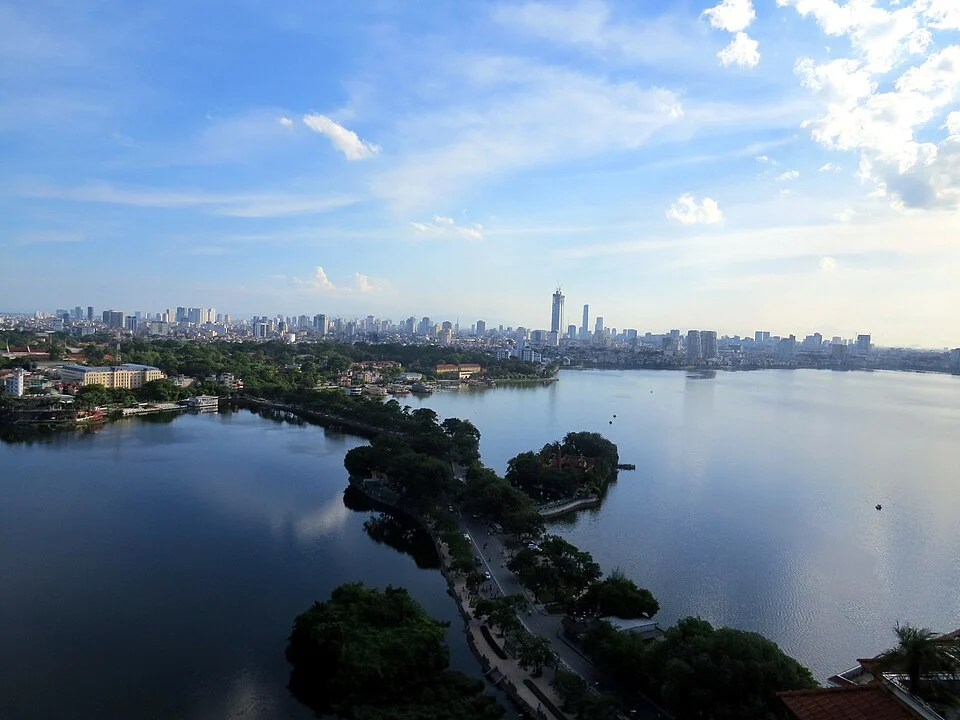
Exploring Thanh Niên Road by motorbike in half a day is best understood as riding to the narrow road between West Lake and Trúc Bạch Lake, parking lawfully and spending about three to four flexible hours on foot. This route emphasizes two-lake views, the Cổ Ngư story, a choice of one cultural site, and the changed Yên Phụ junction traffic arrangements in November 2026.
A half-day on Thanh Niên Road, not a motorbike lap around West Lake
Table of contents25
Thanh Niên Road is the nearly one-kilometre causeway between West Lake and Trúc Bạch Lake. It offers two contrasting waterfront views, and it also connects everyday city traffic with landmarks such as Quán Thánh Temple at its southern end and Trấn Quốc Pagoda toward its northern side. Although you can arrive by motorcycle, the best way to enjoy a half-day here is to park legally and explore manageable stretches on foot. This is a self-guided idea, not a packaged sightseeing tour. No entry ticket covers the whole public road, and no source confirms a particular parking place will have spaces at the time you arrive.
A useful half-day is not about riding back and forth on the same street. Rather, allow three to four hours to notice the two lake landscapes, understand a little local history, choose one optional cultural stop, and make time for a break. If a religious site is closed or heavy rain arrives, remove it from the plan. Your actual travel time from a hotel or from Long Biên is separate and must not be treated as part of a fixed official schedule.
Begin with the correct end of the road
The Ba Đình tourism portal describes the road as 992 metres long between Yên Phụ and Quán Thánh, separating Trúc Bạch from West Lake. These are more useful orientation points than a search for ‘West Lake’ alone, which may take visitors to another part of its extensive shoreline. For a group staying in the Old Quarter or central Ba Đình, the southern Quán Thánh–Thụy Khuê side can serve as a sensible map reference. People arriving from northern West Lake should pay particular attention to the Yên Phụ end, where construction-related traffic arrangements affect some turns.
Neither end is an obligatory entrance for walkers. You can start where legal access and parking are practical and reverse the order of the activities. Agree on a specific intersection or the name of the parking facility when meeting friends. ‘Meet at Thanh Niên’ is too vague when different people may be standing on opposite ends of the road. Do not make last-minute U-turns just to reach a preferred starting point.
Important November 2026 construction warning
From 21 October 2026, Hanoi adjusted traffic near the Thanh Niên–Yên Phụ junction and on parts of Nghi Tàm and Yên Phụ for the construction of Tứ Liên Bridge. An updated traffic-police briefing published on 4 November explained the temporary closure of median openings and revised turning movements. In particular, riders leaving Thanh Niên at the northern junction may be directed right onto Yên Phụ before using an authorized turnaround when they need to head toward other northern streets. The smaller Yên Phụ street also has a one-way arrangement in the announced plan.
These rules are not a guarantee that every sign will remain unchanged throughout the construction. Check the latest local instructions, follow traffic officers and never cross a barrier to keep a sightseeing schedule. See the 4 November 2026 police update. This matters most before the sightseeing begins and again when collecting a parked motorcycle for the return journey.
A realistic three- to four-hour outline
| Suggested block | Activity | Check before continuing |
|---|---|---|
| 0–35 minutes | Reach a permitted parking facility and agree on a meeting point | Ticket, fee, return deadline and exit route |
| 35–85 minutes | Walk a safe Thanh Niên section with views of both lakes | Pedestrian access and weather |
| 85–145 minutes | Read the Cổ Ngư history and choose a calm scenic pause | Road crossings and accessible paths |
| 145–200 minutes | Visit one optional landmark or take a café break | Current opening rules, menu and cost |
| Last 25–40 minutes | Return to the vehicle and check the legal way out | Parking closes and traffic diversions |
Every interval is an editorial estimate, not a measured walking time or a published timetable. Depending on where you park, some activities may happen in the opposite order. Older family members, children and photography enthusiasts may need more time. A very simple itinerary with two lake views and a quiet break can be more rewarding than trying to visit every nearby temple.
First scenic stop: compare West Lake and Trúc Bạch
The signature of Thanh Niên is having water on both sides of the road. West Lake feels broad and open, while the Trúc Bạch side is smaller and more closely framed by surrounding streets. You do not have to cross the carriageway repeatedly to appreciate this contrast. Find a lawful public pedestrian segment, look toward each side when it is safe, and notice how trees, buildings and everyday movement change the view. Avoid blocking the path when stopping to take photographs or discuss the scenery.
A road beside the water is still a road. Do not stand in a traffic lane, ride along pedestrian-only parts or climb railings to get an unusual picture. If maintenance barriers close a viewpoint, choose another section rather than stepping through them. The purpose of a lakeside visit is to experience the public space, not to collect photographs at the expense of other people using it.
Cổ Ngư and why this causeway is part of Hanoi’s history
The Ba Đình tourism portal discusses the road’s former name Cổ Ngư and its relationship with older embankments. It also warns that some colorful explanations of its earliest origin are historically uncertain, rather than presenting one simple legend as a fact. In the late 1950s, local young people and students helped improve the road, which later received the name Thanh Niên. The name itself makes a brief historical pause especially appropriate on a half-day outing.
Instead of repeating a doubtful exact founding year, consider the better-supported story: this corridor evolved with Hanoi’s waterways and became a recognizable public road between two lakes. You can compare its present traffic, landscaping and buildings with documented old photographs. Historical interest does not require entering private courtyards or assuming every old-looking structure survived intact from the same period. Ba Đình’s description of Thanh Niên provides a starting point for this research.
Which cultural landmark should you add?
Quán Thánh Temple lies near the southern end of the road, and Trấn Quốc Pagoda is associated with the West Lake side toward the north. Both are well-known sites with religious and historical significance, but adding both to a short visit can make it feel rushed. Choose one according to where you started, whether it is open at the time, and the group’s interests. If you prefer open-air views, it is perfectly reasonable to skip both and spend more time along the road.
At a religious site, dress appropriately, keep voices low, follow any signs about photography and respect worshippers. Do not state an admission price or opening hour based on old tourism listings without a current confirmation. For the pagoda’s historical development, a Government news account of Trấn Quốc describes its relocation to the West Lake island. Cultural context is useful; a rigid promise about today’s opening time is not.
Quán Thánh Temple as a southern-end option
The southern road end is associated with Quán Thánh Temple, a religious site that has played a significant role in Hanoi’s cultural history. According to the Government news portal, the temple honors the deity Huyền Thiên Trấn Vũ and contains a notable historic bronze statue. If the temple is accepting visitors and your group is interested, it may add a focused cultural stop to an outing otherwise dominated by views of water. Leave enough time for a proper visit rather than taking a hurried photo at the entrance.
Do not park at a gate merely because you see other motorcycles nearby. Religious sites and neighborhood entrances need access. The location is a geographic landmark, not a guarantee of public parking. If the temple is closed or the queue is long, use the time for a calm walk nearby and continue with the rest of the plan. See the Government article on Quán Thánh Temple for historical background.
Trấn Quốc Pagoda as a northern-side alternative
Trấn Quốc Pagoda has long been associated with West Lake and is an attractive cultural option when your walking route naturally takes you toward the northern side. It offers a different kind of experience from simply looking across the water: religious architecture, an island setting and opportunities to learn how the pagoda’s location changed through history. Check visitor access at the time of your trip and follow on-site instructions carefully. A footpath or gate that is temporarily closed should not be bypassed.
Keep the pagoda optional. If you have already spent time at Quán Thánh, forcing an additional religious site into a half-day may leave too little time to enjoy Thanh Niên itself. Visitors with limited mobility should consider how far they must walk from their actual parking location. A thoughtful choice of one landmark is more important than completing a list of attractions.
Parking is part of the plan, not an afterthought
A half-day visit can be spoiled if the motorcycle is left in a place with unclear custody or closes before you return. Choose a recognizable operator, check posted fees, receive a ticket or identification code, and ask for the latest vehicle collection time. We have not verified a specific parking company on Thanh Niên as currently authorized, open or guaranteed to have spaces. Do not rely on an old social-media map pin, an improvised attendant or a line of parked vehicles as sufficient evidence.
For a fuller checklist, use our Thanh Niên Road parking guide. The road’s current junction changes make the return journey important as well: even a parking place that looks close on the map can require a detour to exit legally. Keep the ticket, confirm key-handling rules if your bike is rented, and take valuables with you.
Approaching the road from the Old Quarter or Long Biên
From the Old Quarter, choose a clear road-end landmark and check the current one-way streets rather than relying on a universal turn-by-turn sequence. From Long Biên, a suitable Red River bridge and traffic toward central Hanoi need to be considered before the final approach to Thanh Niên. The journey can vary considerably because of the river crossing, construction and local conditions. An itinerary that claims every traveler can arrive in a fixed number of minutes would be misleading.
Use a navigation map for planning, but observe the current road signs. Do not hold a mobile phone while riding. Our Thanh Niên motorbike directions article covers the journey and the 2026 junction arrangement separately. This half-day plan focuses on what to do after arriving rather than duplicating every driving instruction.
Coffee, food and rest without invented recommendations
A break is valuable in a three- to four-hour outing, particularly in humid or rainy weather. You may choose a suitable café or food stall if one is open and has a clear menu. Do not assume a particular business is open, has seats, offers an advertised price or provides a safe parking service just because it appears on an old tourism page. Ask about ingredients and allergies when ordering; prices should be checked at the establishment rather than copied from another business.
A short sit-down can also be the moment to decide whether to continue to a cultural site or return to the vehicle. Families may want a shaded space and a clean restroom, while a group of friends may prefer spending more time taking photographs. Alcohol should not be part of a plan to ride home: if anyone drinks, arrange another lawful means of travel and separate vehicle collection.
Best time of day depends on weather, not a magic hour
Some visitors prefer early morning light, others the atmosphere of late afternoon. Neither choice guarantees sunshine, clear reflections or light traffic. Hanoi weather can involve summer heat, sudden showers, winter mist or cooler evenings. Check a forecast shortly before departure and bring water, appropriate clothing and rain protection. During a thunderstorm, avoid exposed edges, unsafe trees and slippery surfaces; seek appropriate shelter or end the outdoor portion of the outing.
If you are combining the trip with a temple visit, organize the day around that site’s actual access arrangements, not around a guessed opening time. In the late afternoon, leave enough daylight to identify where you parked. A flexible schedule is one of the advantages of self-guided travel. Do not hurry or take unsafe shortcuts merely to photograph a particular lighting condition.
With children or older travelers
A family may find the 992-metre road manageable, but the actual walk can be longer once parking, crossings and a cultural stop are added. Choose safe, accessible public pedestrian stretches and do not assume the whole corridor is level or step-free. Keep children away from the water’s edge and supervise them at crossings. For older visitors, one scenic segment and a rest may be more enjoyable than walking the full length in both directions. A café or a shaded stop can replace a second landmark.
If traveling by motorbike with a child, observe Vietnamese passenger and helmet requirements that apply to the real vehicle and passengers. If someone’s energy drops, shorten the route or use suitable alternative transport rather than insisting on the original plan. The goal is to spend meaningful time beside the lakes without compromising safety or comfort.
Keeping a group together safely
When several people arrive on different motorbikes, agree on a precise parking or meeting address before splitting up. Take note of the north and south road ends because people may assume opposite directions. If some group members want a temple visit while others prefer photography, set a time to reunite at a recognizable public landmark without blocking pedestrian movement. Avoid gathering at a busy road corner or crossing while looking at phones.
The rider leading a group should not make sudden turns to prevent someone from falling behind. If the route changes because of Tứ Liên roadworks, regroup only at a safe and legal point. A successful shared afternoon needs clear arrangements, not constant riding in a tight formation. Keep tickets and rental contact information available so everyone can return to their own vehicle.
Budgeting without a fictional all-inclusive price
This is not a commercially packaged tour, and no common ticket is needed simply to experience a public road and available views of the lakes. Expenses may arise for parking, drinks, meals, an optional religious attraction and transport back to the hotel. We cannot state a valid total without knowing the facilities chosen or confirming their current charges. The October 2026 Hanoi parking tariff concerns a defined class of publicly funded temporary road and pavement parking areas and must not be applied to all private lots.
If you rent a motorbike, the rental price and deposit are separate terms of that specific rental business, not a fee to visit Thanh Niên. Ask for each cost directly before buying or paying. A low-cost outing with a walk, an optional cultural visit and a simple break can still be satisfying. You do not have to add every paid activity to make the half-day worthwhile.
If construction, rain or crowds disrupt the itinerary
Keep a shortened version ready: park legally, enjoy one safe view of the two lakes and take a rest. If the north junction is congested, consider the approach your map and current traffic staff permit rather than forcing the original route. If a temple is closed, do not turn the day into a hurried search for another attraction. If the weather changes suddenly, delay or cut short the outdoor stages. The aim is a practical afternoon, not a checklist at any cost.
Avoid climbing over work barriers, following a prohibited street on the way back or leaving a motorcycle in an unauthorized position. Treat operating hours, pedestrian access and parking availability as real-world information that may change. Clear priorities make the plan robust even when some elements are unavailable.
Sources and verification limits
The Ba Đình tourism portal documents the road’s length, relationship to the lakes and name history. The Government article on Quán Thánh and the article on Trấn Quốc Pagoda provide cultural context. The 4 November 2026 traffic-police report supports the diversion warning.
These sources do not establish real-time parking capacity, restaurant opening times, temple admission arrangements, measured walking durations or a guaranteed photographic view. All timings in the itinerary are suggestions that you should adjust to conditions on the day. On-site signs and subsequent official traffic notices take precedence over this publication.
Frequently asked questions
Can I ride my motorcycle continuously around both lakes during this visit?
That is not the aim of this plan. Reach Thanh Niên via permitted roads, park legally and enjoy suitable public sections on foot rather than attempting to ride every shoreline.
How much time is enough for Thanh Niên Road?
A flexible three- to four-hour half-day allows views of two lakes, a break and one optional cultural stop. Adjust the duration for weather and accessibility.
Where should I start?
Choose either the Yên Phụ or Quán Thánh–Thụy Khuê end according to your hotel, legal access and verified parking arrangements.
Is there a fixed ticket for the walk?
No single ticket covers the public street and available lakeside views. Parking, food and optional site visits may each cost extra.
Have traffic movements changed in November 2026?
Yes. The Tứ Liên Bridge works have affected Thanh Niên–Yên Phụ since 21 October 2026. Observe current signs and police instructions.
Can I ride home after a beer at a café?
No. Do not drive a motorbike after consuming alcohol. Arrange alternative transport and appropriate collection of the parked vehicle.
Comments