
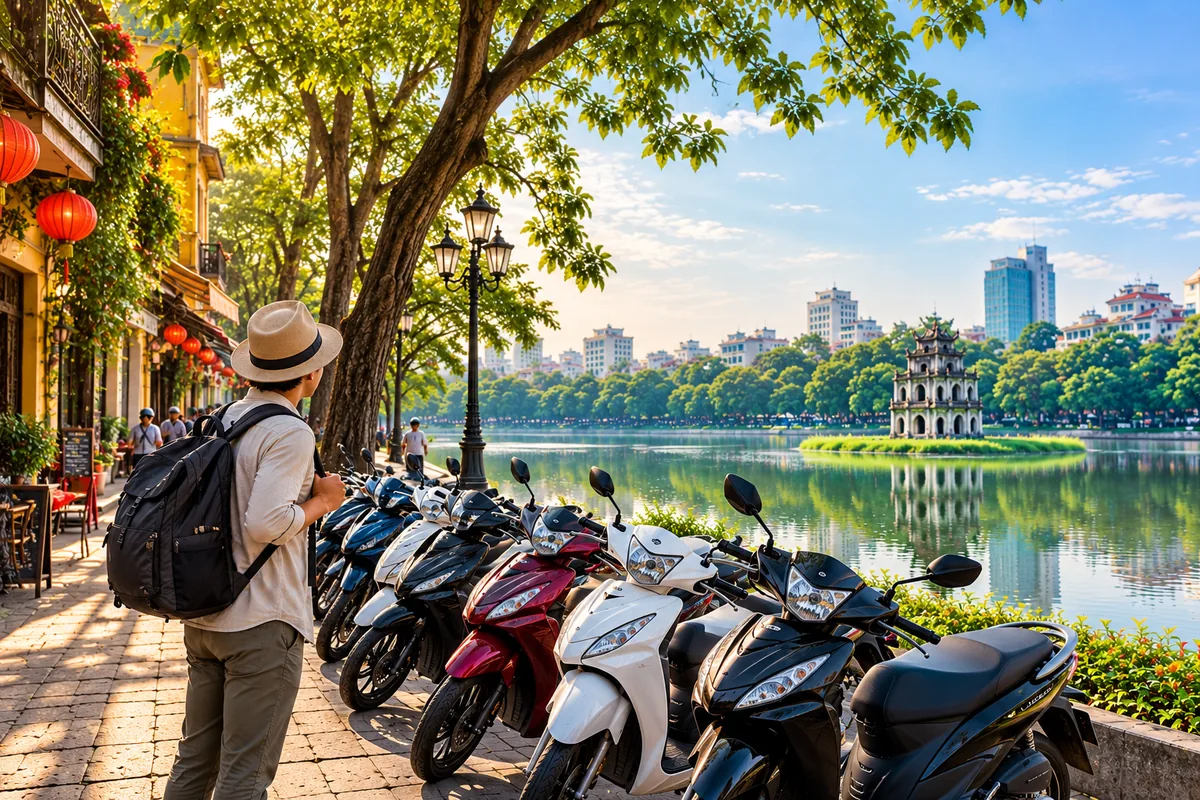
Should you hire a motorbike for just one day in Hanoi? The answer depends on much more than price. Your route, licence, riding experience, luggage, weather and parking arrangements all affect whether a rental is actually a good idea.
Start with your itinerary, not the rental price
Table of contents16
A hired motorbike can give an experienced rider freedom to change plans around Hanoi, but that freedom is not always valuable. If your day consists of a walking tour, lunch near Hoan Kiem Lake and an evening in the Old Quarter, having a motorbike means paying to keep it parked. If you need to visit several widely separated addresses on a fixed schedule, a vehicle may be useful. The relevant question is what the bike enables you to do that walking, public transport and a car service cannot do as conveniently.
Before requesting a quotation, write down your actual destinations and approximate visiting times. Include the time required to pick up and inspect the motorbike, navigate one-way streets, find legal parking and return it. A simple list often changes the decision. This guide is about whether a day hire suits your needs; detailed rates and deposits are covered separately in our daily rental cost guide.
The traveller who is likely to benefit most
Daily hire tends to work best for someone who already rides motorbikes competently, holds a licence recognised for the specific vehicle in Vietnam and expects several meaningful trips throughout the day. A visitor staying away from the most walkable areas might need to travel between work appointments, accommodation and restaurants without following a strict bus timetable. The ability to change a route can be an advantage when each destination has suitable parking.
This does not mean that every rider with experience should hire automatically. A very busy workday may leave no time to manage the bike, while heavy rain could make public transport or a car more attractive. The person who gains the most from a rental is generally someone able to take responsibility for parking, fuel, the return appointment and safe operation without these becoming the main events of the day.
A licence and confidence are both essential
You should establish your legal eligibility before thinking about the bike model or payment. A car licence does not automatically allow motorcycle riding in Vietnam, and not every document marketed as an international driving permit is recognised. Requirements may depend on the issuing country, relevant conventions, vehicle category and supporting original licence. Consult official current information and the rental operator, and check insurance conditions for motorcycling.
Legal documents are only part of the picture. Someone who has never ridden a motorbike, or has only tried a scooter in an empty car park, may find Hanoi’s intersections and dense traffic overwhelming. Hiring a bike to teach yourself in the Old Quarter is not a sensible shortcut. Consider a taxi, ride-hailing service, bus or a walking itinerary if braking, balance, road positioning and scanning traffic are not already comfortable skills.
One destination versus many independent stops
Imagine a visitor who wants to see one museum, have lunch and return to the hotel. If those activities are clustered in the same neighbourhood, walking between them and using a ride-hailing car for one longer journey may be easier than taking responsibility for a scooter all day. Even where distances look short on a map, a one-way road system can turn a quick ride into a longer loop, followed by time spent looking for parking.
Now imagine an experienced rider making appointments in several districts, each at a different time and with a known place to leave the bike. Being able to head directly between stops can be worthwhile. The key distinction is not the number of map pins alone. It is whether the actual sequence of journeys is more practical on a motorbike after accounting for traffic, parking, collection and return arrangements.
Why your accommodation location matters
Hotels and apartments differ considerably in their parking arrangements. A building on a broad road with supervised motorbike spaces may make daily hire straightforward. A guesthouse deep inside a narrow lane, or accommodation within a pedestrian-controlled area, can make keeping a motorbike more complicated. Ask your host whether overnight parking is permitted, whether it is attended and whether access changes at particular times or during weekend events.
For visitors staying near Hanoi’s Old Quarter, also consider where the rental can legally be handed over. Mr Tú’s contact location is 17 Phúc Tân, Hoàn Kiếm, but delivery to a specific hotel and any associated charge must be confirmed for the booking. Do not assume the operator can stop safely in front of every building. The effort of getting to and from the handover point belongs in your travel planning.
Weather can turn convenience into extra work
Hanoi’s weather is variable. Summer heat can make longer rides tiring, sudden rain can interrupt a sequence of appointments and cooler damp conditions can affect comfort. A weather app is useful for planning, but a forecast is not a promise. If the timing of your journey is rigid, consider what happens if you need to stop and wait for a heavy shower to pass. Your booking terms may not automatically change because of rain.
In wet conditions, road markings and metal covers can become slippery, visibility may drop and puddles can conceal hazards. Do not attempt to ride through deep or unfamiliar floodwater. If you are carrying a laptop, attending formal meetings or travelling with someone uneasy about getting wet, a covered vehicle may be the more reliable choice. Choosing transport according to conditions is sensible rather than a failure to be adventurous.
Luggage changes the calculation dramatically
A motorbike should not be treated as a substitute for transporting large suitcases. Bulky items can interfere with steering, braking or the rider’s ability to move freely. If you are checking out of a hotel and heading elsewhere, investigate luggage storage or a separate vehicle for bags. Carrying a small, securely positioned daypack is a different prospect from balancing two large cases on a rented scooter.
A passenger also makes a difference. The bike needs to be suitable for the combined load, both people require properly fitted helmets and the rider must be comfortable stopping, starting and turning with someone behind. If the second person is anxious on a two-wheeler, that matters. The apparent saving from two people sharing a hire charge is not a good reason to overlook comfort, capacity and safe operation.
Automatic scooters are not automatically beginner-friendly
The phrase automatic scooter sounds simple, yet models vary in weight, seat height, power delivery and braking response. Semi-automatic bikes have different controls and may suit riders familiar with them. The decision should be about the actual vehicle rather than a generic category photograph. Ask which bike is available, its engine capacity and whether your licence and experience cover it.
At handover, confirm you can stand securely, reach the brakes and identify the horn, turn signals, lights and ignition. If you cannot manage the bike safely while stationary, busy streets will not make the situation easier. It is reasonable to ask about an alternative model or choose not to proceed. A cheap daily rate cannot compensate for a machine you are not confident handling.
Parking can take more time than riding
Hanoi’s central neighbourhoods have one-way streets, controlled pedestrian areas and locations where stopping is not permitted. Visitors sometimes underestimate how much effort it takes to find an authorised parking place near each attraction. A destination shown on a map does not imply motorbikes can park outside its entrance. Look for attended parking where possible, keep the ticket and remember the precise location.
For a series of nearby sights, consider parking once and walking between them instead of moving the bike every few streets. This can reduce both expense and frustration. If your entire day is spent within a compact walking area, it may suggest you never needed the motorbike in the first place. Parking and collection should be part of your itinerary, not a problem discovered once you arrive.
Foreign visitors should verify insurance, not just permits
Even where the licence question has been addressed, another important issue remains: insurance. Some travel insurance products exclude motorcycle use entirely, or impose conditions concerning licensing, engine capacity, helmets or the way the vehicle is used. A compulsory third-party policy is not necessarily a substitute for personal medical, damage or trip coverage. Read the relevant terms rather than assuming your travel policy will pay for any incident.
Ask the rental operator what cover, if any, applies to the vehicle and what responsibilities are allocated under the agreement. Do not treat verbal reassurance as equivalent to policy wording. If the insurance position is unclear, this may be a reason to choose a different way of getting around. The best travel plan is one that you can undertake safely and lawfully, not merely one that looks convenient on social media.
Staying in the city or planning a trip beyond Hanoi?
Day hire for city journeys and a day trip outside Hanoi are not interchangeable arrangements. If you are considering a long ride to another province or a mountainous area, tell the operator about the intended route before booking. The permitted area of use, mechanical support, responsibility for repairs and suitability of the vehicle need to be explicit. A rental described as convenient for urban travel is not automatically licensed or equipped for every regional journey.
A distant trip also increases fatigue and exposure to changing road and weather conditions. Build realistic rest time into any plan and consider trains, buses or a driver if the itinerary is demanding. Never conceal the intended destination to secure a lower daily quote. A provider declining a particular route is an operational limit worth respecting, not an invitation to improvise beyond the agreement.
Compare options on your real day, not an imaginary one
Build a simple comparison for the day you have planned. For a rental, include the agreed hire fee, fuel, parking, collection and return time, and any confirmed delivery charge. Track the refundable deposit separately as money needed at pickup rather than treating it as permanent spending. For a taxi or ride-hailing itinerary, estimate the separate journeys, including possible peak-time demand.
Then consider factors that cannot be captured by one number: your riding experience, weather, luggage, anxiety about road traffic and how strict your schedule is. A motorbike may be slightly cheaper yet much less suitable. Or a competent rider with several flexible stops may value its independence even if the cash difference is small. Comparing the complete journey is more useful than looking for a universal cheapest option.
Three practical traveller profiles
First, consider an experienced rider living temporarily in Hanoi, with a valid licence, safe parking and multiple work appointments in different areas. A daily or weekly hire could be worth exploring. Second, take a first-time visitor spending most of the day around Hoan Kiem Lake, the Old Quarter and pedestrian streets without prior riding experience. Walking and occasional car journeys are likely to be easier and safer.
Third, picture two travellers with large luggage, a hotel checkout and a flight that evening. Their travel day includes moving bags and meeting an exact deadline. Splitting transport—car for luggage and suitable local journeys on foot—may make more sense than a motorbike. None of these is a rigid rule, but they show why one recommendation cannot fit every traveller.
What to confirm if you decide to book
Once you have made the decision, ask about the exact vehicle, rental dates and times, pickup and return point, permitted route, all authorised riders, required documents and payment terms. Ask the operator to spell out the hire fee separately from the deposit. At collection, inspect tyres, brakes, mirrors, lights, indicators, horn, existing scratches, fuel level and helmet fit; take photographs for your own record.
Mr Tú’s daily and weekly rental guide, licence and paperwork guide and handover information are useful before making arrangements. If anything is unclear, resolve it before paying or leaving the pickup point. A written agreement and a careful inspection make the journey easier to manage.
Frequently asked questions about suitability
Is a motorbike necessary for one day in Hanoi? No. It depends on your destinations, riding skills and available alternatives. Can a beginner hire one to practise? Busy public streets are not appropriate for learning. Does an automatic scooter solve that problem? No; safe riding requires much more than knowing the throttle. Is it worth hiring for the Old Quarter? Often not if your visit is concentrated within walkable or restricted streets.
Can two people share a bike? Only with an appropriate vehicle, safe load and helmets, and a competent authorised rider. What if it rains heavily? Stop and reassess; alternative transport may be safer. Can I travel outside Hanoi? Only if the agreed terms permit your route. How do I find the final price? Request a specific quote for your actual vehicle and dates rather than relying on an advertised starting amount.
The sensible conclusion is personal
Daily motorbike rental in Hanoi can be a practical choice for confident, properly licensed riders with several separated destinations and realistic parking arrangements. It can be a poor choice for inexperienced visitors, people with heavy bags or anyone whose plans mostly involve walking through the historic centre. Rain, strict departure deadlines and the comfort of a passenger can also shift the answer.
Choose the transport option that serves your real journey. If that is a rental, contact Mr Tú through the official contact page to confirm availability, the actual vehicle, all charges and return conditions. If walking, a bus or a car service makes more sense, that is an equally valid outcome. A responsible decision starts with safety and convenience, not the excitement of having the keys.
Comments