
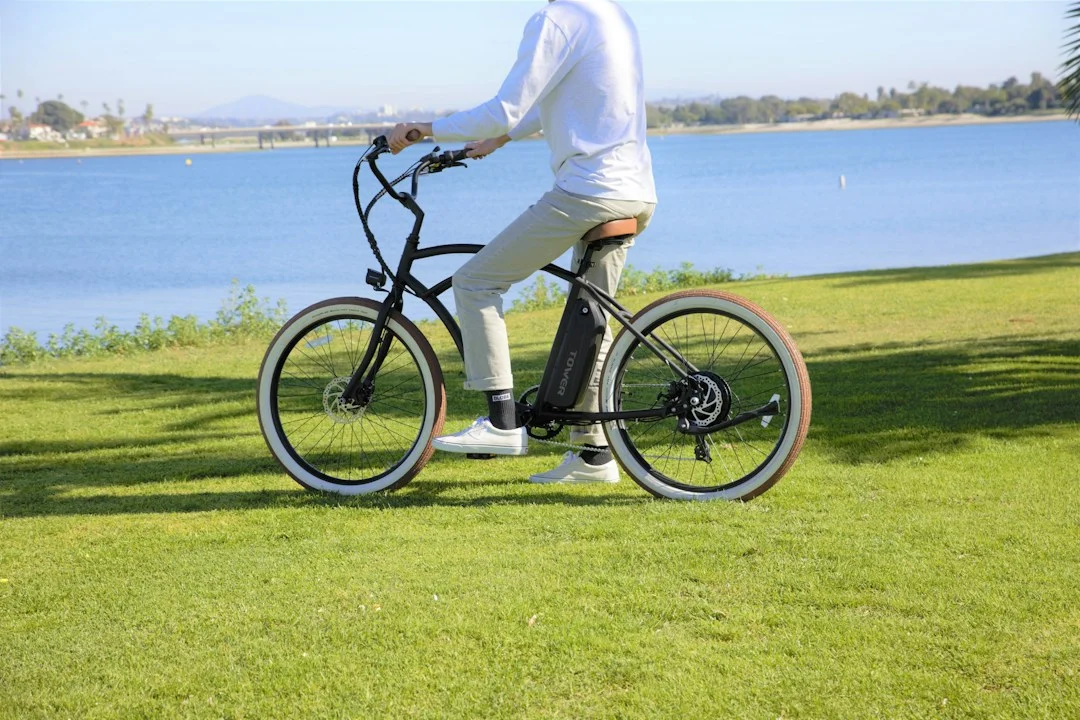
Renting an electric bicycle in Hanoi: alternatives to consider. Compare legal pedal-assisted bicycles with ordinary bikes, electric mopeds, petrol scooters, buses, taxis and walking. The focus is on safe charging, battery limitations, real journey needs and verified rental terms.
Electric bicycle rental in Hanoi: the real trade-offs
Table of contents23
A pedal-assisted electric bicycle can help someone who already cycles confidently make appropriate city journeys with less physical effort. It is not automatically better than a regular bicycle, a bus, walking or a taxi. Hanoi’s streets, parking options, weather and permission to charge the battery determine whether the convenience is real.
This comparison addresses practical strengths and limitations rather than repeating our electric bicycle cost guide or rider suitability guide. Mr Tu’s rental price, actual available models, deposit and battery range remain subject to confirmation.
Advantage: assistance while pedalling
A true pedal-assisted bicycle supplements the rider’s effort rather than replacing the need to balance and use the pedals. On suitable trips, assistance may make a longer route feel less demanding. People who enjoy cycling but have several destinations in one day might appreciate being able to vary assistance settings.
However, the bike still needs safe steering, braking and attention to people crossing the street. Electric assistance is not a substitute for learning to cycle. Ask the rental business how the particular model activates assistance and when it cuts out; different control panels and weight distribution may feel unfamiliar.
Advantage: deciding when to leave
With a bicycle available throughout the agreed period, a competent rider can choose departure times and rearrange destinations without following a bus timetable. This can help on a schedule involving classes, errands and visits across areas where cycling is permitted. Independence is most useful when the distances are manageable.
The rider must also find lawful parking, secure the bicycle and return it on schedule. One-way restrictions and pedestrian streets may force detours. Compare door-to-door travel time, including the search for parking, instead of judging transport choices by an advertised top speed.
Advantage: no petrol purchases during use
A bicycle with electrical assistance relies on a rechargeable battery rather than petrol for its motor support. If accommodation offers approved charging, this may integrate conveniently into an ordinary daily routine. Riders do not need to look for a petrol station to replenish the assistance system.
But electricity is not necessarily free and charging may take time. Hire fees, parking, maintenance responsibilities and accommodation rules still matter. When hotel staff prohibit charging, a conventional bicycle or a direct bus route might be more practical than an electric option.
Disadvantage: finding a permitted charging location
Hotels, apartments and student residences can limit or prohibit charging electric bicycles or removable batteries in rooms and corridors. The existence of an unused wall socket is not permission to connect a vehicle charger. Fire-safety rules and access to suitable parking spaces must be checked before hiring.
Use only compatible equipment in good condition, keep cables clear of escape routes and do not charge a swollen, wet or damaged battery. Stop use if there is unusual heat or a burning smell and contact the provider. Lack of approved charging can outweigh the benefits of the electrical assistance.
Disadvantage: unpredictable distance per charge
Actual distance depends on battery condition and age, terrain, rider weight, assistance mode, weather and how much the person pedals. A manufacturer figure measured on a new bicycle in ideal conditions should not be treated as a guarantee for a rented model travelling through stop-and-go Hanoi traffic.
Plan the entire journey including the return trip and leave a reserve. Ask about the battery on the actual bike, rather than relying on generic sales specifications. If assistance fails, the extra weight may make unassisted pedalling tiring, so people with limited endurance should not assume they can always finish effortlessly.
Disadvantage: parking and looking after equipment
Renters are responsible for securing the vehicle and protecting keys, locks, chargers and other accessories under the contract. In the Old Quarter, legal bicycle parking may be farther from a café or tourist attraction than expected. Collecting the bicycle again can take extra time during a short outing.
Photograph the condition, battery display and accessories at handover. Ask about loss or damage rules and avoid leaving equipment unattended. If most stops have no suitable parking, walking or a taxi can be easier despite the appeal of a flexible personal bike.
Legal classification: electric bicycle versus moped
Under Vietnamese road law, a motor-assisted bicycle falls into the non-motor-vehicle category when motor assistance stops if pedalling stops or the bicycle reaches 25 km/h. A powered electric moped that moves independently can be in a different category. Commercial names such as e-bike are not sufficient to establish legal status.
Read the official Vietnamese road traffic law and verify the real vehicle’s pedal-assist mechanism and technical documents. Different classes can mean different requirements for age, licensing, registration and insurance. Do not automatically apply motorcycle rules to every electric bicycle.
Compared with an ordinary bicycle
A standard bicycle requires no traction battery, charging cable or electrical charger. For short journeys near accommodation, it may be simpler and easier to maintain. A pedal-assisted bike could reduce effort on longer suitable routes but may also weigh more and require extra care of the battery and electronics.
Compare seat height, handling, brakes, weather and the rider’s fitness. Some visitors who plan only a few short trips may be better off walking or using a conventional bike. Avoid assuming the more technically complex option is always more suitable or cheaper.
Compared with an electric moped
An electric moped and an assisted bicycle can look similar in advertisements, yet they operate and are classified differently. An independent throttle-driven vehicle may create different legal and practical obligations. Someone confident on a bicycle should not presume immediate competence or entitlement to ride a motor-powered scooter.
If the rental company offers an electric moped instead of the requested bicycle, request the model and documents, reassess the rider’s eligibility and confirm a new quote. Our electric motorbike rental cost guide explains the separate category.
Compared with a petrol 50cc scooter
A petrol 50cc scooter, when correctly classified as a moped, can operate without electrical charging infrastructure. However, the rider must understand the throttle, braking, road positioning and the legal conditions for the motorised vehicle. It is not an automatic substitution for a bicycle with assisted pedalling.
For a fair comparison, examine the real rental price, fuel cost, allowed travel area, battery or engine condition and assistance if the vehicle fails. Not needing a charger may help some travellers, but a petrol scooter introduces its own responsibilities and may be unsuitable for someone without riding experience.
Compared with Honda Vision and Click
Honda Vision and Click include motorcycle versions above the small-moped category. Their legal requirements and handling differ significantly from those of a pedal-assisted bicycle. A person who may legally cycle does not automatically have the necessary driving licence or experience to operate a larger petrol motorcycle.
If the provider suggests changing to Vision or Click, check the exact model, registration, licence requirements and separate hire agreement. A bigger engine does not inherently make the journey safer or cheaper. For someone unqualified to self-drive, buses and booked cars remain appropriate alternatives.
Compared with Hanoi city buses
City buses relieve passengers of the need to store, charge and return rental equipment. If a student or worker lives near a direct route, public transport may be efficient and predictable. Its disadvantages include waiting, fixed timetables, transfers and walking from stops.
An electric bicycle can give more freedom between scattered addresses when the rider has the skills and a legal route. Compare a complete week’s journeys rather than one bus ticket against a full daily hire charge. Include parking and time spent collecting and returning the bicycle.
Compared with a taxi or booked car
A taxi can be a strong option for heavy luggage, rain, unfamiliar roads or a person unable to cycle safely. It avoids battery management, bicycle parking and responsibility for a rented charger. A booked car can also be practical when visiting only one distant destination in the day.
For a day with numerous suitable stops, an electric bicycle might give flexibility, but the comparison should consider verified hire costs, possible parking fees, travel time and charging arrangements. A refundable security deposit is money needed at pickup, not necessarily the same as final spending.
Compared with walking through Hoan Kiem
Many shops, cafés and attractions around Hoan Kiem Lake and Hanoi’s Old Quarter sit within short walking distances. A bicycle may require riding around one-way streets, finding legal parking and coming back to retrieve it. The administration of a rental can add unnecessary complexity to a walking-focused itinerary.
If the day involves multiple farther destinations, an electric bicycle could become useful, provided the roads are suitable. Map your actual stops and check access restrictions instead of treating a rented bike as necessary for every trip. Walking is a practical competitor, not merely a fallback.
Helmets and passengers on assisted bicycles
Vietnamese traffic law requires people operating and riding as passengers on motor-assisted bicycles to wear appropriate helmets correctly fastened. It also restricts the number of passengers on bicycles, with a specific exception concerning an additional child younger than seven. These rules apply to the real legal category, not a marketing slogan.
Check the manufacturer’s permitted load and the bicycle’s seat construction. Do not carry multiple adults or attach heavy suitcases to the handlebars. Extra weight can alter balance, braking and battery performance. For a group with luggage, a taxi or suitable car may be a better decision.
Foreign visitors and different e-bike terminology
In different countries, the phrase electric bike may refer to an assisted bicycle or a throttle-powered vehicle. International visitors should not assume foreign regulations or classifications apply unchanged in Vietnam. Ask how the assistance stops and which local road and helmet rules cover the exact bike.
Request instructions in a language you can understand, including safe braking, locking and using the correct charger. If traffic appears overwhelming, take a bus or car with a driver. A holiday is not an exemption from road signs or pedestrian-zone restrictions.
Commuting to school or work
For a repeat journey, a rider may value flexible departures and lower pedalling effort on suitable roads. Yet the school or workplace must have an authorised space for the bicycle, and home charging needs to be acceptable. Busy dismissal times, poor lighting and unexpected rain can change the risk.
Compare both outbound and return routes, not just the distance to the destination. Ask about support for defects and whether the renter is responsible for supplied equipment. A direct bus service might be more convenient over a full month than a bicycle requiring daily charging and care.
Rain and flooded streets
Wet roads reduce tyre grip and can make stopping harder. A bicycle designed for ordinary rain is not necessarily safe to take through deep floodwater. Electrical components and charging connectors have their own exposure limits. The shortest route is not always the safest during severe weather.
Avoid water of unknown depth and never use a wet or damaged charger. If the bike has been immersed or shows an electrical warning, contact the rental provider before continuing. A taxi or bus may be the better option on a day of heavy rain even if rental days remain prepaid.
Compare the full cost, not only the hire rate
A rental fee is the agreed payment for using the vehicle. A security deposit can potentially be returned according to the contract, so it should not automatically be counted as an expense permanently lost. Charging electricity, parking, accessories and delivery may create additional costs only where actually agreed.
Ask the provider for an itemised quote based on dates and the actual bicycle, with a clear return time, equipment list and refund conditions. It would be misleading to invent rental prices or claim a specific battery range. Compare transport options using your full itinerary and real offers.
A decision table for different needs
No single vehicle wins every comparison. A cyclist on a regular commute, a tourist exploring adjacent Old Quarter streets and somebody carrying suitcases should be expected to choose differently. Use the same questions—legal eligibility, safety, comfort, storage, charging, route and total confirmed cost—for every option.
| Option | Potential benefit | Check first |
|---|---|---|
| Pedal-assisted bicycle | Reduced effort, flexible route | Legal class, battery, charger, helmet |
| Ordinary bicycle | No charging needed | Fitness, weather, distance |
| Electric moped | Different powered operation | Legal category, licence |
| Petrol 50cc moped | No battery charging | Eligibility and fuel |
| Bus | No rented vehicle to keep | Route and waiting |
| Taxi | Driver and luggage space | Full journey cost |
| Walking | Simple nearby travel | Weather and distance |
Frequently asked questions
Is an electric bicycle always cheaper than the bus? No, compare the actual trips and quoted rental costs. Can the battery be charged in a hotel? Only with permission and suitable safety conditions. Can you pedal when the battery runs out? That depends on the actual bicycle’s mechanical condition and weight. Can the bicycle be used on a provincial journey? Check the route and contract.
Does the rider need a helmet? A person operating a legally defined motor-assisted bicycle and their passenger must wear one correctly. Is the same minimum age applied to a powered electric moped? Do not copy another vehicle category’s rules without verification. Can a car be better for heavy bags? Usually it deserves consideration.
Conclusion and requesting the real options from Mr Tu
An assisted bicycle can be a sensible choice for an experienced cyclist making suitable trips with secure parking and an approved charging location. It is less appropriate for complete beginners, a holiday spent mainly walking, very long routes without reliable charging or large suitcases. Buses, taxis and ordinary bicycles are genuine alternatives.
Mr Tu’s contact address for this website is 17 Phuc Tan, Hoan Kiem, Hanoi. Provide your dates, route, cycling ability and charging arrangements, then ask for a confirmed available model, pedal-assist behaviour, charger, written price and deposit. This guide makes no guarantee about inventory or battery range.
Comments