
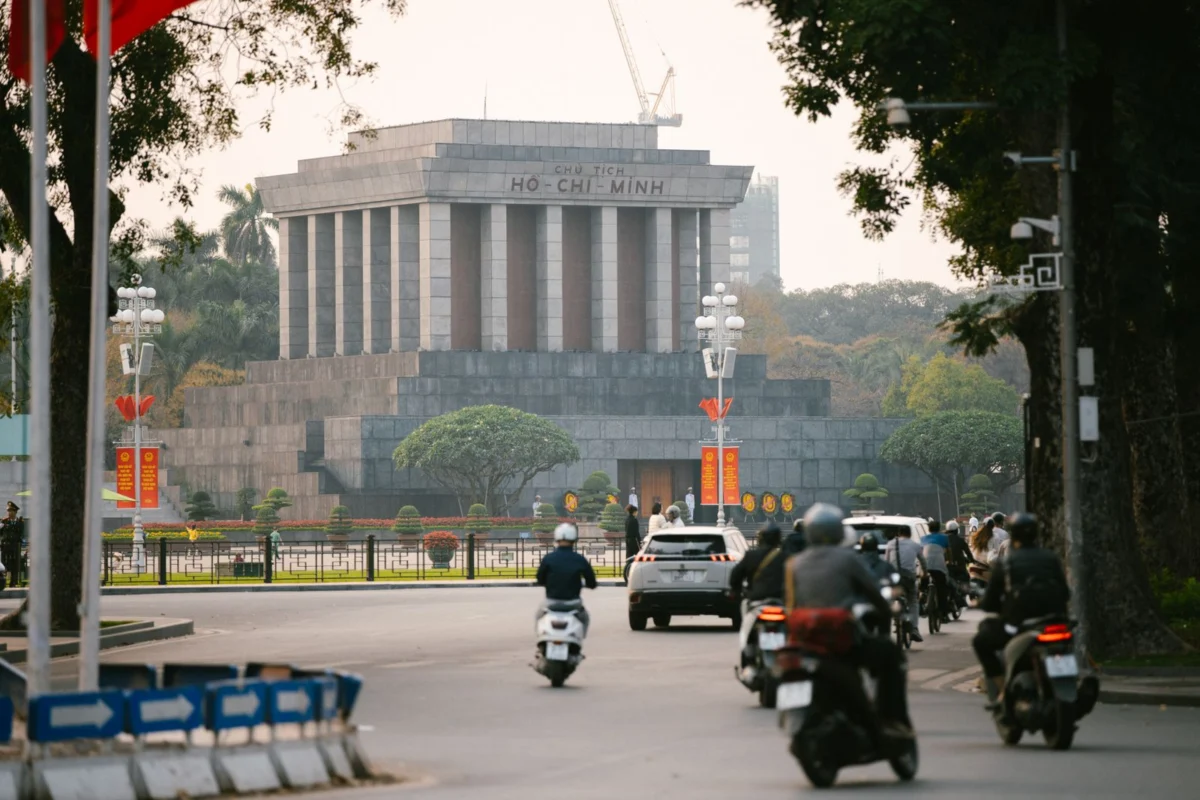
Half-day plan: ride legally to Ba Dinh, verify a motorcycle parking facility, visit Ho Chi Minh Mausoleum during its confirmed morning opening, then select one nearby cultural site if time permits. Vehicle access, pedestrian admission, parking and visiting hours are separate conditions.
Start with the visit, not with the motorcycle
Table of contents25
A motorbike is useful for approaching Hanoi’s Ba Dinh district; it is not a ticket to ride to the protected entrance of the Ho Chi Minh Mausoleum. Make the riding leg and the memorial visit two separate tasks. First reach a road open to your vehicle, leave the bike at a verified facility, and then follow the pedestrian route established for visitors. That distinction matters because routes can change for security operations, ceremonies and special traffic measures.
For a half-day outing, choose one main goal. Paying respects inside the mausoleum takes priority if you are travelling on a visiting morning. If it is not a visiting day, you can plan a different walk around permitted public areas or consider nearby heritage institutions after checking their separate opening times. Trying to fit every nearby attraction into one rigid timetable is less practical than selecting two meaningful experiences.
Confirm the official visiting calendar first
The Ho Chi Minh Mausoleum Command lists regular memorial visits on Tuesday, Wednesday, Thursday, Saturday and Sunday mornings. Monday and Friday ordinarily have no memorial visits, except for particular commemorative or holiday exceptions announced by the authorities. Hot-season and cool-season morning hours differ, and weekend schedules may extend the visiting window. Never trust an old map review as the definitive schedule; check the official notice for your actual travel date.
The distinction between the memorial visit and the nearby public square is crucial. A notice about mausoleum opening does not automatically confirm that the museum, presidential historical site, gardens or motorbike parking facilities share the same hours. Similarly, a walk around the neighbourhood is not a substitute for an interior visit. Give each stop its own check for admission, permissible routes and closing time.
Why a maintenance closure changes the whole plan
The mausoleum undergoes periodic maintenance, during which visits to pay respects inside are suspended. Official notices publish the relevant closure and reopening dates. A traveller who builds a route solely around an old blog post may arrive on a day when no interior visit is possible. Rather than claiming year-round entry, check the current announcement and keep a backup attraction in mind.
Do not assume that a maintenance closure shuts every cultural attraction around Ba Dinh. Nearby sites can have independent management and schedules. If your one available morning coincides with a closure, describe the outing honestly as a historical district walk, subject to current public access, or reschedule the mausoleum visit itself. This avoids wasting time at a protected gate or trying an unauthorised entrance.
Prepare the rider, vehicle and a compact day bag
Inspect tyres, brakes, lights, mirrors and fuel or battery before departing. A rider needs the appropriate valid licence for the vehicle being used, where required by law. If using a rental motorcycle, read the actual rental agreement and confirm whether the intended journey is permitted. Do not assume a scooter classified as 50cc carries the same performance or licensing requirements as a larger motorcycle.
Wear modest, comfortable clothing and shoes suitable for standing in line and walking. Pack lightly: the memorial area may restrict certain objects, filming and photography, and baggage arrangements can change. Keep your parking ticket and important belongings secure. If travelling with a child or older relative, prepare for waiting time and possible weather exposure rather than assuming everyone can move continuously for four hours.
Plan the ride without treating the map pin as a car park
Use a map to identify the wider Ba Dinh area, then obey real one-way signs, traffic controls and temporary barriers. The central pin for the mausoleum is not necessarily a vehicle entrance, drop-off point or motorcycle parking location. Review the separate guide to riding towards the mausoleum before leaving, then give priority to police and on-site directions if these differ from your navigation app.
A first-time visitor to Hanoi should build in extra time to look for legal turns and a suitable place to stop before checking the phone. Do not block a junction while deciding whether a street is open. If road controls become more complex than expected, it is sensible to park farther away at a properly identified facility or switch to another mode of transport. Riding closer does not improve the memorial experience.
Choose parking by evidence, not by distance
A safe parking decision requires more than a short line on a map. Look for an actual entrance, an operator accepting motorcycles, a displayed charge or clear explanation, a ticket or other reliable acknowledgement, and an agreed collection time. Official parking locations announced for a special event are not proof that the same sites operate as permanent motorcycle parks. Availability and prices must be checked on the day.
If the facility is full, do not leave a motorcycle on a pavement or beside a barrier on the assumption that others have done so. For a hired scooter, clarify whether the attendant needs the key and how handover works under your rental agreement. See the companion guide to parking near Ho Chi Minh Mausoleum for the questions worth asking before walking away.
An adaptable timetable for a half-day visit
| Stage | Suggested activity | What to confirm |
|---|---|---|
| 1 | Ride to Ba Dinh and find lawful parking | Road access, operator and collection hours |
| 2 | Join the visitor route for the mausoleum | That morning’s admission and security directions |
| 3 | Walk in the designated square area when permitted | Open public access and any ceremony |
| 4 | Choose one nearby cultural stop | Independent opening and admission arrangements |
| 5 | Return for the bike and leave safely | Parking ticket, road direction and vehicle condition |
This is a sequence, not a promise that each activity takes a fixed number of minutes. Queue lengths can vary dramatically, especially on weekends and during holidays. The first two stages may take most of your available morning. If the queue is long, dropping the optional cultural stop is a better choice than cutting through a restricted pedestrian area to meet a made-up schedule.
Understand the difference between visiting and sightseeing
Paying respects inside the mausoleum is a solemn activity governed by specific rules. Walking around permitted parts of the square, looking at surrounding architecture and visiting a museum are different activities. Photography restrictions are particularly important inside protected areas. You should not infer from photographs posted online that the same filming or photo opportunities are currently allowed.
This difference also helps when travelling in a mixed group. Some visitors may be interested in the historical exhibition, others may prefer a shorter outdoor walk. Agree on the priority before the ride, and keep meeting points outside any restricted or crowded entrance. Avoid leaving a companion responsible for a parking ticket if that person plans to depart separately.
What can follow the mausoleum visit?
Depending on opening and permitted visitor routes, possible next stops in the wider complex include the Ho Chi Minh Museum, the historical area associated with the Presidential Palace and stilt house, and the One Pillar Pagoda. They serve different interests and should not be treated as a single admission area. The museum suits travellers who want more context and exhibitions; the historical site has a different route and presentation; the pagoda offers architectural and religious context.
Choose a second stop only after checking its operation that day. The site associated with the Presidential Palace also contains government working areas, not all of which are open to tourists. Stay in the clearly indicated visitor section and do not assume that a courtyard seen from the street can be entered. There is no need to visit every site for the half-day to feel complete.
A history-focused version of the half-day
For a traveller interested in twentieth-century Vietnamese history, start with the memorial visit, then select an exhibition or the historical stilt-house area if open. The first stop provides a solemn context; the second offers more space to understand the life and work of President Ho Chi Minh. Give yourself time to read material rather than simply collecting photographs of buildings.
The stilt-house historical area is connected to the broader Presidential Palace complex, which retains protected functions and managed routes. Check the current entry route and the venue’s own rules. Do not promise a fixed ticket price, exact visiting duration or full access to each building without checking the operator. If the morning queue was long, reading one exhibition carefully is preferable to a rushed circuit.
A lighter outdoor itinerary
If you prefer a less intensive cultural morning, plan the lawful ride and parking, the mausoleum visit when available, and then a brief walk in public areas that are actually open. Look at the scale of Ba Dinh Square and the architecture from designated places while respecting memorial activities. Avoid assuming that the square is freely accessible throughout the visit: guidance and barriers can change.
This version is useful for groups with children, travellers who need more breaks or people visiting in hot weather. Bring drinking water as appropriate but follow the current rules about what may be carried into secured areas. If somebody becomes tired, stop at an appropriate rest point and shorten the trip. There is no benefit in pushing everyone to complete an arbitrary checklist.
Photography, dress and respectful behaviour
The mausoleum and surrounding commemorative area are not simply another tourist photo stop. Follow instructions on silence, queues, hats, clothing, bags and electronic devices. Photography is restricted in particularly sensitive areas; never photograph where prohibited, and do not use a phone while walking through a controlled route. Outside, look for signs and ask staff before recording an event.
Dress respectfully and choose shoes you can walk in comfortably. A lightweight sun layer may help outdoors, while winter mornings may require warmer clothing. Large luggage and elaborate camera setups create extra complications at screening points. The simplest approach is to bring only what you need for the visit and keep the rest secured appropriately before joining the queue.
Budget without inventing prices
Separate spending into transport, fuel, parking and any independently operated attraction you choose to visit. A motorcycle rental has its own terms and price; parking is a different provider. Even when a public memorial visit does not require an admission ticket, this does not mean other museums or cultural facilities share the same policy. Verify each cost from the party actually charging it.
Do not copy a parking fee from a travel forum and present it as a universal official tariff around Ba Dinh. Ask for the visible rate and the period covered before handing over your motorcycle. Confirm late collection arrangements rather than assuming overnight storage is included. For a rental scooter, record the agreed return time so a long queue does not surprise you with a late return.
Adapt the route for children, older visitors and accessibility
A half-day route on a map can underestimate standing time, walking distances from the actual parking gate and the effect of security barriers. For children, explain before arrival that the memorial visit requires a quiet, orderly queue. Carry essential supplies as permitted but reduce unnecessary bags. If you expect mobility difficulties, check accessibility arrangements with the responsible staff before travelling.
Avoid assuming that a scooter can deliver someone directly to a secured visitor entrance. A legal alternative drop-off or another transport mode may be more suitable for a person who cannot walk far. When deciding on an extra stop, consider whether your group still has the energy for it. A single meaningful visit undertaken comfortably is a better outcome than three rushed stops.
If you arrive on Monday, Friday or after the visiting window
These situations require a genuine change of plan, not a search for a side gate. The mausoleum ordinarily does not hold memorial visits on Mondays and Fridays; specific exceptions and special events are published. An afternoon arrival on a normal day cannot simply be treated as an interior visit. Instead, check which surrounding heritage sites operate separately and which public walking areas are accessible.
Keep the distinction explicit if sharing the itinerary with other travellers. A neighbourhood walk may still be worthwhile, but it is not the same activity as paying respects inside the mausoleum. You might plan a return on the next appropriate morning rather than spending the available half-day searching for non-existent entry options.
When traffic restrictions or ceremonies change the approach
Ba Dinh has ceremonial and government functions. On selected days, vehicles and pedestrians may face temporary diversions that differ from the normal map route. Do not attempt to pass a barrier just because it is the shortest route to a photo location. Follow police and security staff instructions, and give them priority over a route suggestion that may not be current.
If your intended parking facility becomes inaccessible, stop in a lawful place before reassessing options. Try a verifiable alternative or change transport mode; do not leave the motorcycle unattended on a footpath. Group members should communicate their new meeting point outside the restricted area instead of waiting at an entrance where lingering is discouraged.
Finish the visit with a careful collection
Return to the parking facility within the time agreed with its operator, allowing for the walk back. Compare the registration with your ticket, check mirrors and visible condition, collect belongings and ask about any discrepancy before leaving. If you have lost the ticket, follow the operator’s identity-verification process rather than attempting to take the motorcycle out without authorisation.
For a rented bike, report unexpected damage or a key problem under the actual rental contract. Confirm the permitted direction of traffic when leaving the facility: one-way rules or temporary restrictions may mean you cannot simply reverse the incoming route. Do not consult the map while moving; pull over safely and plan the homeward leg.
A decision checklist before you start the engine
Check that your selected date offers the activity you want; confirm the mausoleum’s current opening notice; make sure the rider is legally qualified; inspect the motorcycle; save the route and parking guides; pack modest clothing; and prepare a flexible second stop. Do not make non-refundable plans based on a speculative queue duration or an unverified parking fee.
On the way back, check the ticket, the collection deadline, your belongings and the current road signs. If your group has only a few hours, plan for one primary experience rather than a long list of stops. The best half-day itinerary is the one that respects local rules, gives visitors time to understand the place and ends with a safe return ride.
Frequently asked questions
Is the mausoleum open every morning?
No. The regular memorial calendar has specific visiting mornings and exceptions. Check the current official schedule for your date before setting out.
Can I park a motorcycle beside the mausoleum?
Do not assume so. Use a properly operating facility that confirms it accepts your vehicle and follow the designated pedestrian route.
Is half a day enough for the mausoleum and a museum?
It can be if queues, opening hours and walking arrangements align. Treat the museum as optional and confirm its separate admission conditions.
Do I need to buy an admission ticket for the memorial visit?
The Mausoleum Command has stated that the memorial visit is free, but independently managed attractions and parking may charge. Check current notices.
Can I take photos everywhere in the complex?
No. Some areas strictly prohibit photography. Follow signs and instructions; do not assume outdoor permissions apply inside.
What if I do not have the right motorbike licence?
Do not ride a vehicle that you are not legally entitled to operate. Choose another lawful transport option instead of risking an infringement.
For updates, use the Mausoleum Command’s official announcements. This practical itinerary is a planning guide, not a guarantee of parking, opening times or unrestricted access.
Comments